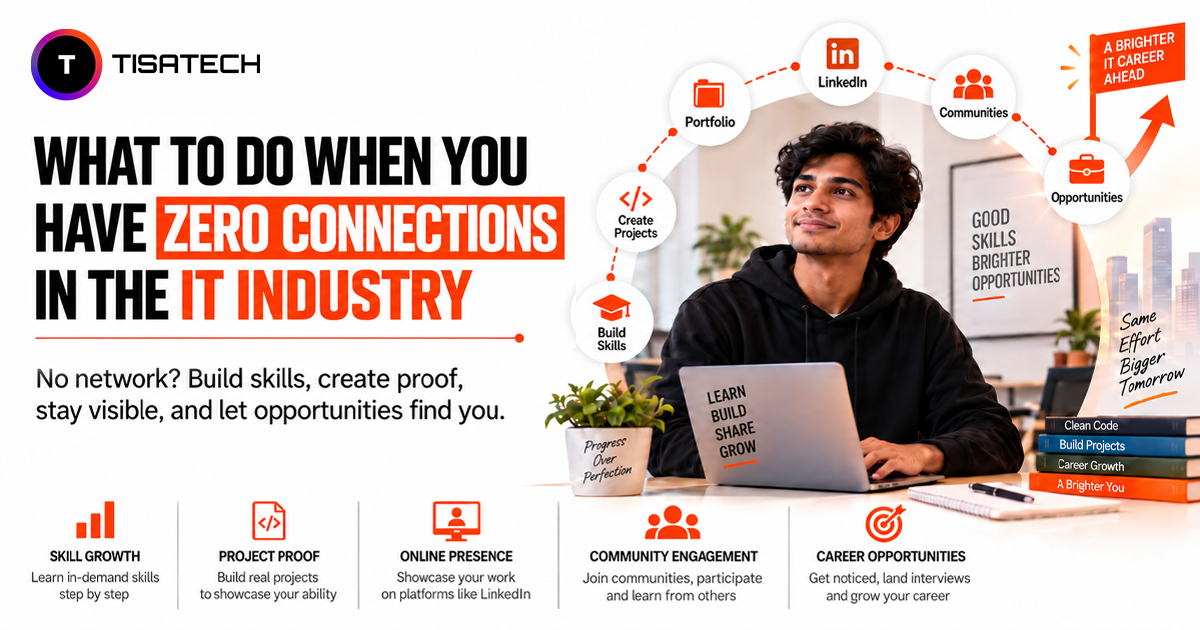
Many B.Tech students in Jaipur face the same problem. They finish their degree, prepare a resume, and apply to many jobs. Still, they get very few replies. After some time, it is easy to think that companies only hire people who already have connections. But that is not always true. You can still learn how to network in the IT industry even if you are starting from zero.
Referrals can help candidates get noticed faster. According to Boterview’s employee referral report, only 6% of applications came through referrals, but they led to 37% of hires. This shows why professional connections can play an important role during a job search.
LinkedIn has also made networking easier for students. India has around 148 million LinkedIn members and ranks as the platform’s second-largest market, according to Cognism’s LinkedIn statistics. This gives students direct access to developers, recruiters, engineers, and other IT professionals.
Earlier, students depended more on campus placements and personal contacts. Today, a student in Jaipur can connect with professionals from different cities and learn directly from their experience. Networking does not mean asking strangers for jobs. It means showing your work, starting useful conversations, and staying connected over time. You do not need a large network to begin. One genuine professional connection is enough to get started.

Why Do IT Freshers Struggle Without Connections?
The main problem is often trust, not talent. A fresher may have the right skills, but recruiters have not seen their work yet. A resume can mention Java, Python, React, or other technologies, but hiring teams still need proof that the candidate can use those skills in real work.
Referrals can make this process easier for companies. According to Wave Connect, referred candidates join in about 30 days, while job board hires can take around 40 to 45 days. Referred employees may also stay longer with the company.
So, how to get an IT job without connections is not only about applying to more openings. Freshers also need to make their skills visible. Projects, GitHub profiles, portfolios, and a clear LinkedIn profile can show recruiters what they can actually do. This is why job preparation for IT freshers should focus on both skills and visibility. The more proof you show, the easier it becomes for people to trust your ability.
How Do You Build Your First Professional Connection in the IT Industry?
Start by making your skills visible. Before you message anyone, update your LinkedIn profile and add your best projects to GitHub. Write a clear README for each project so people can quickly understand what you built and which skills you used. You can also add a short demo video if it helps explain your work better.
Next, choose one area you want to grow in, such as Java, MERN stack, data analytics, AWS, or software testing. Then find people who already work in that field. Start with college seniors, batchmates, alumni, or IT professionals from Jaipur. You can search by college name, city, skill, or company. These people are often easier to approach because you already share something in common.
When you send a message, keep it short and specific. Mention what you have in common and ask one simple question about their experience, skills, or career journey. Do not ask for a job or referral in the first message. A useful conversation gives you a better chance to build a real connection.
You can also build connections through open-source work. Fix a small bug, improve documentation, or contribute to a public project. This gives you a natural reason to interact with other developers. It is one of the practical networking strategies for freshers because the conversation starts with real work instead of asking for a favour.
If you are starting with zero connections, keep the process simple. Show your work, find people in your field, and start with one genuine conversation.
How Should You Connect With IT Professionals on LinkedIn?
Keep your message short and personal. When you send a connection request, use the person’s name and mention something specific about their work. Then ask one simple question. This makes your message feel genuine and gives the other person a clear reason to reply.
For example: “Hi Ankit, I am a final-year student in Jaipur learning the MERN stack. I saw your post about React performance and tried your tip in my project. Could I ask you one question about learning Node.js?”
This message works because it does not ask for a job or referral. It also avoids vague lines like “please guide me” without any context.
Focus on quality instead of sending too many messages. A few thoughtful messages are better than dozens of random requests. This approach helps you build stronger professional networking skills over time.
When someone replies, thank them and continue the conversation naturally. You can also share a short update later about what you learned or built. This helps turn a simple LinkedIn chat into a real professional connection.
How Should You Ask for an IT Job Referral?
Do not ask for a referral in your first message. Start with a normal conversation and give the person some time to know who you are and what you do. Job referrals in the IT industry work better when some trust already exists.
Once you find a suitable opening at their company, check the job details carefully. Make sure your skills match the role. Then send a short message with the job title or job ID, one clear reason why you are a good fit, and your resume.
Keep the request simple and easy to forward. You can write something like: “Hi Priya, I saw a Junior Developer opening at your company, job ID 45231. I have built two full stack projects using React and Node, and both are available on my GitHub. Would you be comfortable referring to me for this role? I have attached my resume. I completely understand if you prefer not to.”
This is a polite way to understand how to get referrals for IT jobs. It gives the other person all the useful details without putting pressure on them.
What Should You Do If Someone Does Not Reply on LinkedIn?
If someone does not reply to your LinkedIn message, do not follow up immediately. IT professionals and recruiters often receive many messages, so they may miss yours or respond later. Wait five to seven days, then send one short and polite follow-up. You can also add something useful, such as a project update or a relevant article.
For example: “Hi Rahul, just following up on my earlier message. I completed the inventory app I mentioned and deployed it here. I would be happy to hear your feedback whenever you have time.”
Follow up only once or twice. If you still do not get a reply, move on and connect with other relevant people. You can still engage with their posts naturally, but avoid sending repeated messages.
This is a simple way to handle how to follow up when someone does not reply on LinkedIn without sounding pushy.
Where Can Jaipur Students Meet IT Professionals?
Jaipur students can meet IT professionals at local tech events and through online communities. Look for developer meetups, hackathons, college tech fests, workshops, and community sessions in areas such as Malviya Nagar and Sitapura. You can also follow local AWS, Google Developer Group, and Python communities to find upcoming events.
Take part in these events instead of only attending them. Volunteer when possible, help with event activities, ask questions, and speak with developers or speakers. Keep your introduction simple and ask people about the projects or technologies they are working on.
After the event, connect with the people you met on LinkedIn. Send a short message within a day and mention where you met or what you discussed. A short follow-up like this helps people remember you and makes it easier to stay connected.
How Do You Turn Networking Into IT Job Opportunities?
Networking works better when you stay consistent. Focus on these simple steps:
- Track your connections: Keep a simple record of who you spoke with, where they work, and what you discussed.
- Share your progress: Post short updates about projects, new skills, or problems you solved. This helps people remember you and see your growth.
- Take small opportunities seriously: Internships, freelance tasks, and short projects can give you practical experience, useful references, and better examples for interviews.
- Ask for advice first: Do not ask everyone for a job. Ask for feedback or guidance and let the relationship grow naturally.
- Stay visible and connected: Follow up from time to time and share real progress instead of sending random messages.
- Say thank you: If someone helps you, thank them and stay in touch. This helps you maintain the relationship for future opportunities.
The goal is simple: stay in touch, keep showing your progress, and let useful opportunities grow from real connections.





Where Can Jaipur Students Build Skills and Industry Connections?
Building technical skills is only one part of starting an IT career. Students also need practical experience, career guidance, and chances to understand how the industry works.
TISA-TECH in Jaipur offers IT courses with career support that focus on practical learning, real projects, and job preparation. Students work on skills they can later show through LinkedIn, GitHub, portfolios, and interviews. They also get support with resume reviews, mock interviews, mentorship, and placement assistance. This helps students understand what recruiters expect and prepare for job opportunities with more confidence.
Trainers and alumni can also become part of a student’s early professional network. Their guidance can help students understand career paths, improve their preparation, and build useful industry connections before entering the job market.
Conclusion
You can build a strong IT network even if you start with zero connections. Show your skills through real projects, connect with seniors and professionals, and start genuine conversations instead of asking for jobs immediately.
Build trust before asking for referrals. Follow up politely, share your progress, and stay connected with people who guide you. Start with one useful conversation, keep showing your progress, and build from there.
FAQs Section
Ans. You do not need thousands of LinkedIn connections to get an IT job. Even a small network can help if you connect with the right people and stay in touch. Focus on developers, recruiters, college seniors, and professionals working in your field.
Ans. Connect with both, but developers are a good place to start. They can tell you which skills and projects matter for a role, while recruiters can help you understand job requirements.
Ans. Add your technical skills, projects, education, internships, and links to your GitHub or portfolio. Keep your profile updated so people can quickly understand your skills and the type of role you want.
Ans. Do not ask for a referral right after someone accepts your connection request. First, have a normal conversation and get to know the person. When you find a job that matches your skills, share the job details and your updated resume, then ask politely.