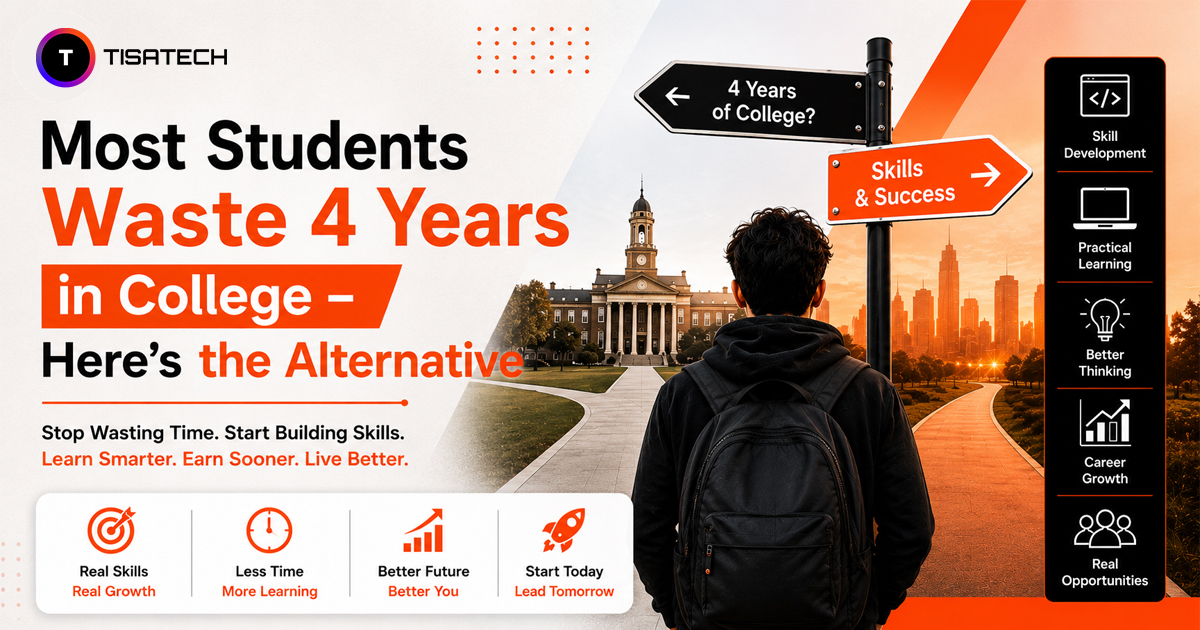
A student from Jaipur clears 12th standard with decent marks. Everyone tells him the same thing: “बेटा, कॉलेज में जाओ, अच्छी डिग्री लो फिर लाइफ सेट हो जाएगी।” He takes admission, pays the fees, buys the books, and waits for the promised future.
Four years later he walks out with a degree but no job offers. The skills companies demand were never taught in class. The certificate means little to a recruiter who wants Python cloud computing or digital marketing experience.
This is not rare. A 2025 analysis showed that 40% of graduates end up in jobs that don’t even need a degree. In 2026 Education Week reported that 77% of seniors felt unprepared for real life after college, up from 72% the year before. More degrees, less readiness.
Meanwhile coding bootcamps, short term certifications, apprenticeships and skill based institutes are producing job ready graduates in 3 to 9 months. Companies like Google, Apple and IBM have already dropped degree requirements. They hire based on skills not on where you studied.
A 2026 report by Metana showed that a 4 year computer science degree in the US costs $163000. A coding bootcamp costs $14000 and takes 4 to 6 months. In India a B.Tech degree costs ₹8 to ₹20 lakh over 4 years. A good bootcamp costs ₹60000 to ₹3 lakh and gets you placed in 3 to 9 months.
This is the reality in 2026. The question is no longer “Should I go to college.” The real question is “Is a degree worth it for what I want to do or is there a smarter faster path.”
This article is for students in Jaipur who want clear answers. We will look at real alternatives to college, compare paths and show the skills that actually get you hired today.
So, Is College Going Worth It in 2026?
Let us be honest here. College is not useless. If you want to become a doctor, a lawyer, or a chartered accountant, you still need a formal degree. There is no shortcut for that.
But if you want to work in tech, digital marketing, UI/UX design, cloud computing, video editing, or graphic design, then a 4‑year college degree is often the longest and most expensive route.
Here is what the data says. A 2025 report by Investopedia showed that a college education yields about 12.5% annual return on average. That sounds good, but the catch is time. You spend 4 years and a large sum of money before you even start earning. In those same 4 years, a skill‑trained student could already be 3 to 4 years into their career, earning, learning on the job, and building a portfolio.
Also consider this. The unemployment rate among recent college graduates in the US hit 5.8% in early 2025, the highest since 2021. Degrees are being printed faster than jobs are being created.
In India, the situation is even more real. Lakhs of engineering graduates pass out every year. Many end up in non‑technical jobs or face long unemployment because their college curriculum never matched industry needs.
So is a college degree worth it in 2026? It depends on your career goal. For many of the fastest‑growing tech and digital careers, smart focused skill training is a far better investment of your time and money.

What Are the Real Alternatives to College?
The good news is that the options available today are better than ever before. These alternatives to college are not backup plans. For many students they are actually the smarter first choice.
Skill-Based Bootcamps and Certification Programs
These are intensive training programs that teach specific job‑ready skills. Duration is usually 3 to 12 months. Topics include full stack development, AI and machine learning, cloud computing, digital marketing, UI/UX design, and more. You skip general subjects and focus only on what recruiters hire for.
According to Course Report 2025, 79% of coding bootcamp graduates are employed full‑time. Many get placed within 1 to 6 months. In India, top bootcamps report placement rates of 70 to 90%.
Vocational Training and ITI Programs
Vocational courses and ITI programs are 1 to 2 year certifications in technical trades. For students who prefer hands-on work these programs lead to stable jobs faster than a B.A. or B.Com degree. Jaipur has several vocational institutes offering programs in electronics, air conditioning, and technical maintenance.
Freelancing and Entrepreneurship
If you learn a marketable skill like coding, design, content writing, or video editing you can start earning on platforms such as Fiverr and Upwork without waiting for a degree or placement. Many young professionals in Jaipur are already doing this successfully. You learn exactly what you need, build a portfolio, and start earning. No 4 year wait required.
Online Certifications from Industry Leaders
Google, Microsoft, AWS, Meta, and other tech companies offer professional certification programs. These credentials are recognized worldwide. A Google Data Analytics or AWS Cloud Practitioner certificate often carries more weight on a resume than a generic B.Sc or BCA degree for tech roles.
Coding Bootcamp vs College Degree: What’s Better for Tech Careers?
Choosing between a coding bootcamp and a college degree is one of the biggest decisions for tech students today. Both paths can lead to success, but they differ in speed, cost, and the kind of skills you gain. Let’s look at how they compare side by side.
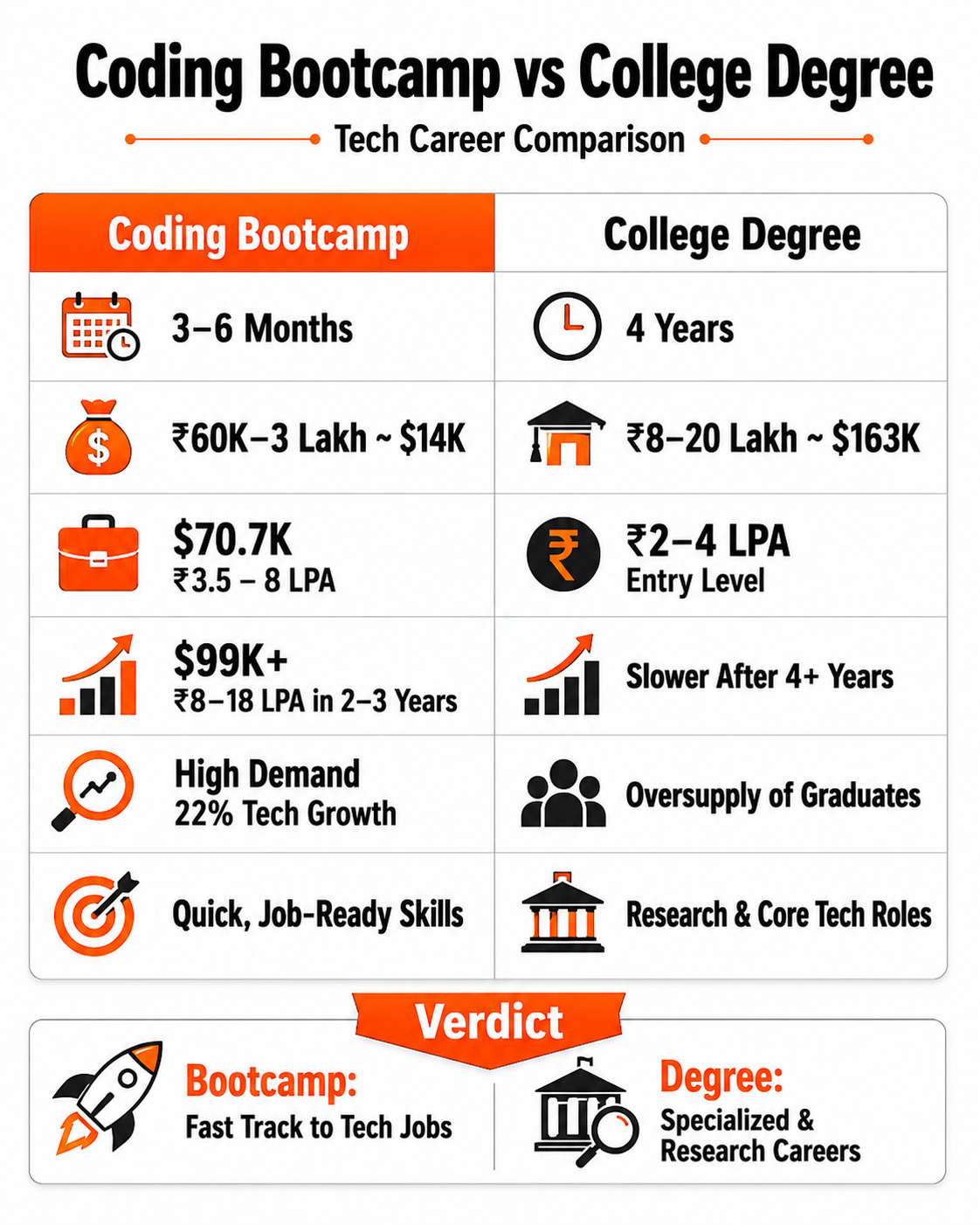
The takeaway is clear. Choose what fits your goal. Bootcamp is best for quick tech jobs, while a degree works better for research or specialized roles.
Jobs That Don’t Require a College Degree – But Pay Really Well
One of the biggest myths students carry is that well‑paying jobs only come with degrees. That is simply not true anymore. Here are some high‑demand roles where skill and portfolio matter more than your degree certificate.
AI and ML Engineering
This is one of the newest and fastest‑growing fields. It does not have a formal college curriculum yet. Specialists learn through hands-on training and practice.
Full Stack Developer
Companies want developers who can build working products. A GitHub profile with real projects speaks louder than a degree. Starting salary in India: ₹4 to ₹10 LPA.
UI/UX Designer
Design tools like Figma and Adobe XD are learned through practice, not textbooks. Recruiters look at your Behance or Dribbble portfolio, not your college name.
Digital Marketing Specialist
SEO, social media ads, email marketing, and analytics are all skill‑based. A Google or HubSpot certification plus real campaign experience is what hirers want.
Cloud Computing Engineer
AWS, Azure, and Google Cloud certifications are industry‑standard. Many companies actively prefer certified professionals over degree holders for cloud roles.
Graphic Designer & Video Editor
Tools like Adobe Premiere Pro and After Effects are self‑teachable. The YouTube and social media industry pays very well for skilled editors.
These careers prove that strong skills and a solid portfolio can get you high pay, even without a college degree.
Apprenticeships and Internships: The Smartest Move You’re Ignoring
Many students in India still don’t see apprenticeships and internships as a real option instead of college. But in countries like Germany and the UK, these programs are already common and lead straight to full‑time jobs. India is moving in the same direction.
Here’s why apprenticeships and internships are powerful:
- You get paid while learning – earn a stipend as you build skills.
- You gain real work experience – from Day 1 you work on actual projects.
- You build industry connections – meet professionals early and grow your network.
- You prove your capability – employers see your skills in action, not just a certificate.
In Jaipur, many IT companies, design studios, and digital marketing agencies already offer internships to students with basic skill training. If you complete a 4–6 month skill course and then do a 3–6 month internship, you often get a job offer before your friends even finish their second year of college.
The National Apprenticeship Promotion Scheme (NAPS) by the Government of India also connects trained youth with companies offering stipend‑based apprenticeships in many sectors. This is a smart and productive alternative to spending 4 years in a classroom.
Apprenticeships and internships give you money, skills, and industry trust faster than a degree.





How TISA-TECH Helps Jaipur Students Build Real Careers
If you are in Jaipur and actively looking for a skill-first path, TISA-TECH is worth knowing about. It is an AI-based tech institute in Jhotwara that offers tech courses with placement support in six areas: AI and Machine Learning, Cloud Computing, Full Stack Development, Digital Marketing, Graphic Designing, and UI/UX Designing.
Training focuses on the latest AI tools and the skills companies need today. Each course is project‑based. Students work on real tasks, build portfolios, and graduate with something solid to show recruiters instead of only a certificate.
Jaipur’s tech and startup scene is growing fast. Companies here are actively hiring skilled professionals in cloud, development, design, and AI. If you want to tap into that demand without spending 4 years in a classroom, TISA-TECH in Jhotwara is a strong starting point.
Conclusion
In 2026, the job market values skills more than certificates. Spending four years in college without a clear plan wastes time.
Students can choose faster paths like bootcamps, certifications, apprenticeships, and vocational training. These options build real projects, portfolios, and industry trust in months, not years.
Students in Jaipur should decide clearly: does the career need a degree or skills that can be built quickly? The right choice will shape the future.
Skills open doors faster than degrees.