Go back to 2010. Someone in Jaipur opens Google and types how to start a business online. Google shows ten blue links. The person clicks the first result, reads the article, then comes back to Google and clicks another link. Websites get traffic & businesses grow. That was how the internet worked.
SEO or Search Engine Optimization made this possible. It meant writing content around the right keywords, building links from other websites, and making sure your pages ranked high in those ten blue links. The higher you ranked, the more people clicked. The more they clicked, the faster your business grew. Simple and powerful.
For nearly two decades, this system worked beautifully. Entire businesses, blogs, and careers were built on one idea: rank high on Google and people will find you.
Then in May 2024, Google changed everything.
Google launched AI Overviews. Instead of ten blue links, Google now reads dozens of pages, synthesizes the key information using its Gemini AI model, and presents a ready‑made answer at the top. The user gets the answer without clicking a single link.
The impact was immediate. A Semrush study of 10 million keywords showed AI Overviews in nearly 25% of all search queries at their peak in July 2025. In B2B technology, Stackmatix reported the number hitting 70% of search result pages. For health and science queries, it crossed 50%.
Websites that had spent years ranking on page one started losing traffic. The Pew Research Center found a 46.7% decline in click rates when an AI Overview appeared. Some SEO experts reported losing 40% or more of their organic traffic in specific categories.
QuickSEO. ai data shows AI Overviews cite an average of 13 sources per response, drawn from a much wider pool than the top 10 results. Ranking number one no longer guarantees your content gets cited.
So the big question for every marketer, blogger, and business owner is clear: how do you stay visible when Google answers questions before users even reach your website? That is exactly what this article explains.
What Are Google AI Overviews and How Do They Work?
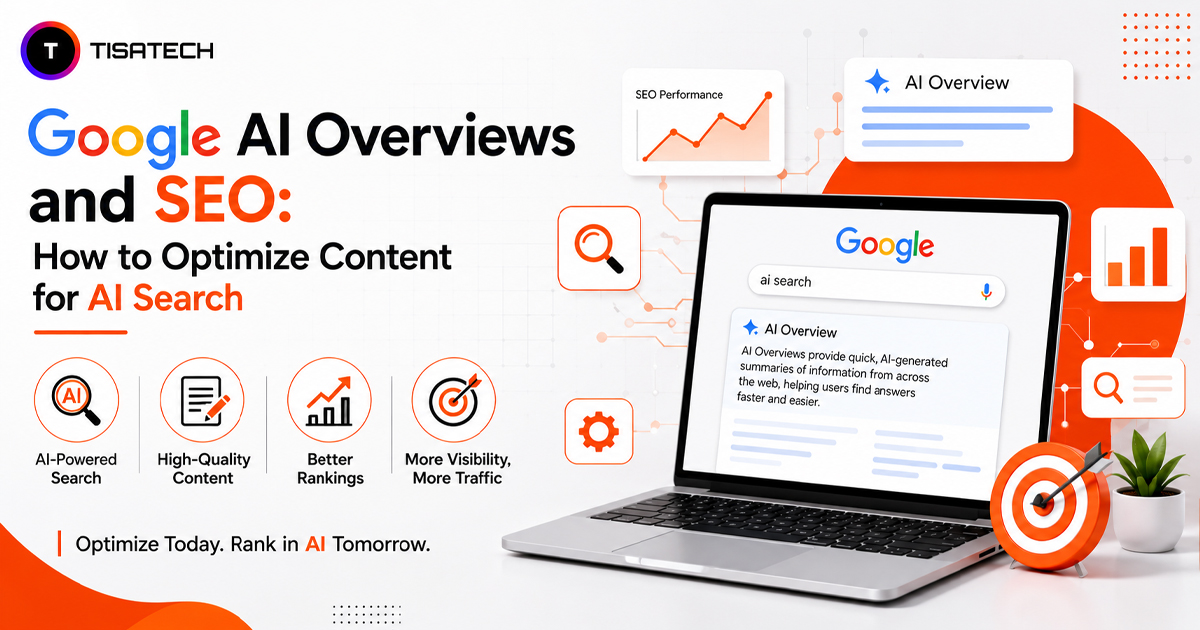
Google AI Overviews are AI‑generated summaries powered by the Gemini model. They appear at the top of search results for informational and educational queries. Instead of showing ten blue links, Google reads multiple web pages, synthesizes the key information, and presents a direct answer right on the page.
Keyword matching alone does not work here. AI understands meaning and context. It favors content that is clearly structured, directly answers the user’s question, and comes from a trustworthy source.
AI Overviews trigger most often for informational queries such as what is, how to, and why does searches. Learning to optimize for Google AI Overviews is now a core skill for digital content creators.

Why Traditional SEO Is Not Enough in 2026?
Traditional SEO worked on three steps: choose the right keywords, build backlinks, and rank in the top three positions. This formula helped businesses grow for years. Now Google AI Overviews have changed the game.
The overlap between top‑10 rankings and AI Overview citations dropped from 76% in mid‑2025 to 17% in early 2026. In 2024, nearly 60% of Google searches ended with zero clicks. When AI Overviews appear, that number goes even higher
This is not the death of SEO. It is its evolution. The goal today is not only to rank. It is to get cited in AI answers and write content so clear that AI systems select it.
Generative Engine Optimization (GEO): The New Layer of SEO
Generative Engine Optimization or GEO means creating content that AI systems like Google Gemini, ChatGPT, and Perplexity can find, understand, and cite in their answers. It builds on traditional SEO but adds new rules.
Traditional SEO focused on ranking algorithms. GEO focuses on AI systems that generate answers. These systems do not just match keywords. They understand context, intent, and meaning. They reward content that is clear, well structured, factually accurate, and complete.
Think of it like this. If you write a vague answer, a human might still read it. An AI system will skip it and move to the next cleaner source. GEO means being that cleaner source, the one AI chooses to cite.
The good news is GEO does not replace SEO. It builds on it. Strong basics like good content, clean site structure, and quality backlinks still matter. GEO adds sharper focus on clarity, depth, and structure that AI systems look for.
How to Optimize for Google AI Overviews in 2026: A Practical Guide
To appear in Google AI Overviews, your content needs to be clear, structured, and easy for AI systems to cite. Here’s a simple framework you can follow:
Lead Every Section With a Direct Answer
AI systems look for the clearest response. Start each section with one or two sentences that directly answer the heading. Give the answer first, then add context.
Build Topical Authority, Not Just Individual Articles
AI Overviews favor websites that show deep expertise. Create a cluster of related content instead of one broad article. Link them together to signal that you are a trusted source.
Publish Original Data and First‑Party Insights
AI systems prefer unique insights. Case studies and real data get cited more often than repeated content. Even small businesses can share their own results, and they should.
Use Clear Headings and Cover Related Questions
Make your page easy to navigate. Use H2 and H3 headings logically. Check the People Also Ask section on Google for your keywords. Add answers to those related questions in your content. This increases your chances of appearing in AI search results.
When you combine direct answers, topical depth, original insights, and clear structure, you give AI systems exactly what they need. That is how your content earns visibility in Google AI Overviews.
Answer Engine Optimization (AEO): Write for Questions
Answer Engine Optimization or AEO means writing content that directly answers questions instead of only targeting keywords. For example, instead of digital marketing course you write for what is the best digital marketing course for beginners in India.
AI Overviews appear most often for question‑style searches. Long questions with five or more words are much more likely to show up in Google AI Overviews than short keywords.
To apply AEO, map out the questions your audience might ask. Write clear answers for each one. Add FAQ sections at the bottom of key pages. This simple step can improve your chances of appearing in AI search results across Google, ChatGPT, and Perplexity.
AEO makes your content the exact answer AI systems are looking for, which helps you stand out in the new search landscape.
Technical SEO in the AI Search Era: What Works in 2026
Technical SEO makes your content visible to AI crawlers. If AI bots cannot reach your pages, they will not show your content in Google AI Overviews no matter how useful it is.
Check your robots.txt file and allow search crawlers. Place important content in plain HTML so AI systems can read it instead of hiding it inside JavaScript. Optimize your site for mobile because more than 81% of AI Overview searches happen on mobile devices.
Ahrefs data from May 2026 shows schema markup does not increase AI citations. Focus first on content quality and crawl accessibility. Schema can still help with traditional SEO, but it is not the main factor for AI visibility.
Technical SEO makes sure AI systems can find and use your content.
Will AI Overviews Hurt Website Traffic in 2026?
AI Overviews can reduce traffic for sites that rely on broad informational content. The Pew Research Center found click rates dropped by 46.7% when an AI Overview appeared. Some SEO experts also reported traffic losses of 40% or more in certain content categories.
The full picture is more balanced. Semrush data shows click‑through rates for keywords with AI Overviews have been rising since early 2025. Users who click after reading an AI Overview already know the basics. They click because they want deeper information, which means they often convert better.
AI Overviews also create a new kind of visibility. When your content gets cited, your brand name appears at the top of Google even if the user does not click. This builds trust and recognition faster than traditional rankings.
The real risk is ignoring these changes. Businesses that adapt by focusing on depth, originality, and topical authority are building stronger visibility in AI search. The goal is not to avoid AI Overviews but to be cited inside them.





Learn SEO and AI Skills at TISA-TECH, Jaipur
Learning GEO and AEO is useful, but applying these strategies on real websites and campaigns is what truly builds a career.
TISA‑TECH in Jhotwara, Jaipur is the best software training institute. This institute trains students through practical methods. You work with real AI tools and live projects, which makes learning more effective than classroom theory alone.
The AI‑integrated digital marketing course explains how Google AI Overviews work, how to structure content for GEO and AEO, how to use AI tools for keyword research, and how to track visibility in AI search.
With placement support and strong industry connections, TISA‑TECH helps learners gain skills that matter. Whether you are starting fresh or already working, the focus stays on building confidence through practice and preparing for the future of digital marketing with AI.
Conclusion
Search evolves, it does not stop. Google AI Overviews highlight good content instead of blocking it. Creators who build depth, clarity, and authority grow stronger in this new search space.
You succeed when you write for understanding instead of algorithms. You give direct answers, build topical authority, keep content fresh, and make sure AI crawlers can reach it.
TISA‑TECH trains learners to apply these skills step by step. Students practice with real projects and AI tools, learning how GEO and AEO shape modern search. By mastering these methods now, they gain an edge that lasts for years.
The search landscape has changed permanently. Those who adapt early lead the way. Learners who master GEO and AEO today shape the future of digital marketing tomorrow.
FAQs Section
Ans. GEO is the practice of structuring content so AI systems like Google Gemini and ChatGPT can find, synthesize, and cite it in generated answers. It builds on traditional SEO with added directness and topical depth.
Ans. According to Ahrefs data from May 2026, schema markup alone does not produce measurable improvement in AI Overview citations. Focus first on content quality, clear headings, and crawl accessibility.
Ans. No. AI Overviews currently appear in roughly 16% of all search queries. Commercial and transactional searches are much less affected. Organic results still appear below AI Overviews for most queries.
Ans. Search your target keywords on Google and look for the AI-generated summary at the top. Check if your site is listed among the cited sources. Tools like Semrush, SE Ranking, and Google Search Console can help you track this at scale.
Ans. Yes. Clear structure, direct answers, and topical authority work the same way across ChatGPT search, Perplexity, and Google Gemini.
Ans. TISA-TECH in Jhotwara, Jaipur teaches AI-integrated digital marketing covering SEO, GEO, AEO, and content strategy.