You write code every day. You fix bugs. You build apps that work. But if your work only stays on your laptop, nobody sees it.
A developer blog changes that. It shows recruiters your skills. It shows the community how you think. And it builds your reputation without needing to network in person.
Blogging is big in 2026. There are over 600 million blogs worldwide, and 7.5 million posts go live every day. Platforms like WordPress power more than 42% of all websites, while Medium has around 150 million monthly readers. Developer‑focused sites like Dev.to and Hashnode bring together millions of programmers who share tutorials and coding tips.
For developers, blogging is not just writing. It’s about sharing your coding journey, building your career, and helping others learn.
So the key question is simple: Which platform should you use?
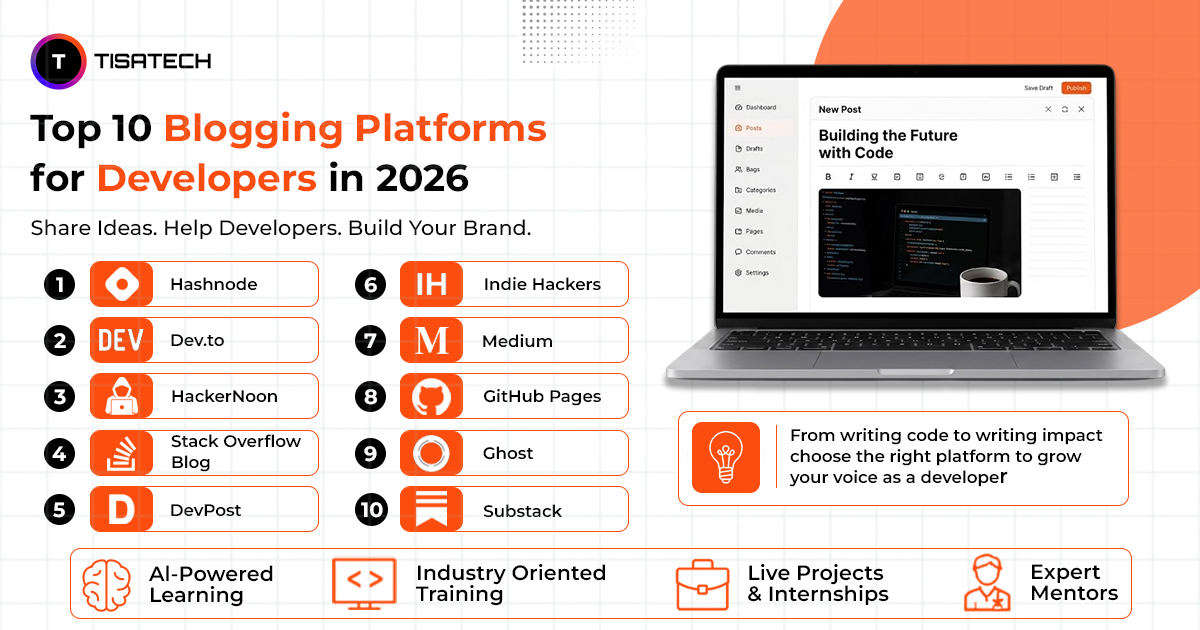
In this guide, we’ll look at the top 10 best blogging platforms for developers in 2026. We checked traffic numbers, community size, and features for each one. Whether you are a student in Jaipur starting out or a working developer growing your online presence, this article will help you choose the right platform.
Why Developer Blogging Still Matters in 2026
Many developers think blogging is only for writers. It’s not.
Blogging is for anyone who solves problems and wants others to benefit from those solutions. When you write about a bug you fixed or a system you built, you make life easier for the next developer who faces the same issue.
That kind of sharing builds real credibility. In 2026, recruiters don’t just look at resumes. They check GitHub profiles, personal sites, and published articles. A developer who writes publicly stands out in a crowd where everyone lists the same skills on paper.
Blogging also makes you sharper. Explaining something clearly forces you to understand it better yourself. The more you write, the more confident you become in your own knowledge.

What Really Matters in a Blogging Platform for Developers
Not every blogging site is made for developers. Some are good for lifestyle writing, but developers need special features. Here’s what actually matters:
- Markdown support : Developers prefer markdown because it’s quick and natural. If a platform doesn’t support it well, writing feels slow and messy.
- Code syntax highlighting : A technical blogging platform must show code with proper colors and formatting. Without this, your examples look confusing and hard to follow.
- SEO support : If you want your tutorials to reach more people, the platform should help Google find your posts. Clean URLs, meta tags, and search‑friendly design make a big difference.
- Community reach : Writing is more valuable when people read it. Platforms with large developer audiences give you readers and feedback from day one.
Cost: The best free blogging platform for developers in 2026 should let you start publishing without paying. Later, you can upgrade if you want more control.
1. Hashnode
Hashnode is a top choice for developers who want to blog seriously. You publish on your own custom domain, so all the SEO value stays with you. Readers visit your site, not a third‑party link.
It supports markdown and code syntax highlighting, so tutorials look clean and easy to follow. You also get a free newsletter option to grow an email list. Setup is fast and takes less than ten minutes. It’s completely free.
The community is another big plus. Developers worldwide browse the Hashnode feed, discover posts through tags, and react to them. Even without a big social following, your writing gets noticed.
Best for: Developers building a long-term personal brand with full content ownership.
Free: Yes.
2. Dev.to

Dev.to has one of the most active developer communities right now. The platform gets millions of visitors every month, and your posts go straight into a live feed that developers are reading. Good posts often get hundreds of views within hours.
You write in markdown, and code blocks show up with proper syntax highlighting. Add tags, and your post instantly reaches the right readers.
Dev.to also supports canonical URLs. You can publish on your own blog first, then cross‑post here. That way you get community reach without losing SEO credit. It’s one of the best free platforms for developers who want readers and feedback from day one.
Best for: Developers who want fast community reach and instant feedback.
Free: Yes.
3. Hacker Noon
HackerNoon is both a blogging site and a tech publication. It has thousands of contributors and millions of readers who come mainly for technology content.
What makes HackerNoon stand out is that every article is reviewed before publishing. This adds trust and makes your posts look stronger in a developer portfolio.
It’s a great platform for thought leadership. Because of its strong Google authority, your articles can keep ranking in search results long after they’re published.
Best for: Developers who want editorial credibility and reach with a large global tech audience.
Free: Yes, free to submit.
4. Stack Overflow Blog
Stack Overflow hosts over 83 million questions and answers. Its content has been referenced over 113 billion times across the internet.It’s one of the most trusted names in developer knowledge.
The Stack Overflow Blog publishes technical articles, developer surveys, and engineering insights. Its domain authority is among the highest in tech, so being featured here adds real weight to your professional reputation.
Publishing works through guest contributions, not open self‑publishing. But as a credibility signal, it’s unmatched.
Best for: Experienced developers seeking the highest credibility association in the developer world.
Free: Yes
5. DevPost
DevPost is built specifically for showcasing hackathon projects and technical builds. It is different from every other platform on this list.
When you complete a project, DevPost gives you a dedicated page to describe what you built, the tech stack you used, and what you learned. These pages are public and SEO-friendly. Recruiters actively browse DevPost to find builders.
For students in Jaipur working on projects during training or college, DevPost is a practical way to make your work visible to companies that are hiring. Many companies also run sponsored hackathons directly on the platform.
Best for: Students and freshers building and documenting technical projects.
Free: Yes.
6. Indie Hackers

Indie Hackers is built for developers who build products and small businesses alongside their coding career.
The culture here is transparent. Developers share real revenue numbers, honest failures, and product decisions openly. It is one of the most engaged communities on any list of developer blogging sites.
If you are working on a side project or a SaaS product, this is where you document that journey. Posts that are specific and honest consistently generate strong engagement and real connections.
Best for: Developer-builders and solopreneurs combining technical writing with product storytelling.
Free: Yes.
7. Medium

Medium has a large general audience beyond developers. For topics like AI careers, data science, or tech leadership, it gives access to a much wider reader base.
Its recommendation system shows your articles to readers based on interests. Big publications like Towards Data Science and Better Programming have huge subscriber bases. Getting accepted into one can bring thousands of extra readers.
The writing experience is clean and beginner‑friendly. Code blocks render well. The only limitation is the metered paywall for non‑subscribers.
Best for: Developers writing about tech careers, AI, and topics with broad appeal beyond pure coding.
Free: Yes.
8. GitHub Pages + Jekyll
GitHub Pages with Jekyll is for developers who want full ownership and no platform dependency. You write posts in markdown files, and Jekyll turns them into a static website. GitHub Pages hosts it free at yourusername.github.io, and you can connect to a custom domain too.
This is one of the original markdown blogging setups. Your blog lives in a Git repo, and you manage content the same way you manage code. There are no algorithms, no platform rules, and no paywalls.
Setup takes more time than other options, but once it’s running you own everything completely.
Best for: Developers comfortable with Git who want full technical control over their blog.
Free: Yes.
9. Ghost
Ghost is an open‑source publishing platform for developers who need more than a basic blog. It supports markdown writing, code syntax highlighting, newsletters, memberships, and subscription tiers in one place. The design is clean and performance is fast.
You can self‑host Ghost for free if you have basic server knowledge. This makes it one of the best free blogging platforms for developers in 2026. Managed hosting is also available if you don’t want to handle infrastructure.
Ghost is especially good for developers building a paid content business. Newsletter monetization is built in, so you don’t need complicated integrations.
Best for: Developers building a content business with plans for a paid audience.
Free: Self-hosted is free. Managed hosting has a monthly cost.
10. Substack : Turn Your Blog into a Newsletter
Substack is a newsletter platform that has grown into a full publishing tool. In 2026 it supports long‑form writing, audio, video, community features, and email newsletters in one place.
Subscribers share their email with you, so your content goes straight to their inbox. You don’t depend on any algorithm. Each post also appears as a public web page that search engines can index.
Many developer educators use Substack to earn steady monthly income through paid subscriptions. The setup is simple and needs no extra integrations.
Best for: Developer educators who want to build a loyal email audience through consistent writing.
Free: Yes. Substack takes a percentage only on paid tiers.





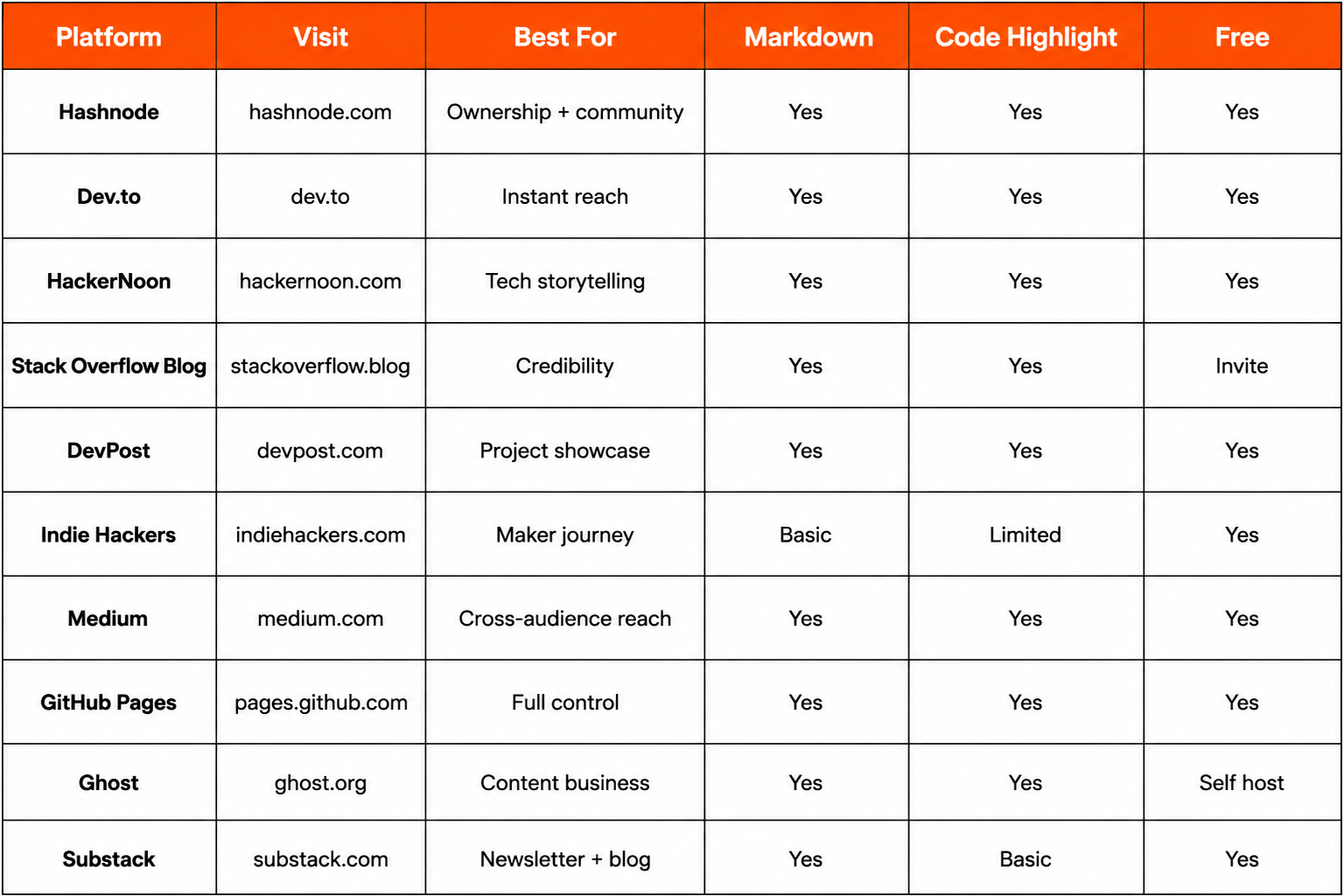
Quick Platform Comparison Table
TISA-TECH – Where Jaipur Developers Learn to Build and Publish
Starting a blog is a good step but it matters only when you have strong skills to share.
If you are in Jaipur and want a career in software development, AI or full stack development, TISA‑TECH is the right place to begin. It is the only AI-powered training institute in Jaipur that blends coding basics with modern AI learning.
Here you learn by doing. Projects, coding tasks, mentorship and workshops make the process practical. When you choose the group of talented developers in Jaipur, you don’t just study theory. You build real projects and gain hands-on experience with tools companies use today.
TISA‑TECH also offers AI-powered full stack development courses in Jaipur. Whether you want to be a web developer, software engineer, AI specialist or full stack developer, these courses help you build skills that are ready for the industry.
Conclusion
You don’t need all ten platforms; just choose one and publish your first article. Starting with Dev.to is the easiest way to share what you’ve learned and get quick feedback. After a few posts, move to Hashnode with a custom domain to build your brand. Projects from college or training can go on DevPost and a GitHub Pages portfolio. When you’re ready for newsletters, shift to Substack or Ghost.
Most platforms are free, support markdown, and highlight code well. The only barrier is starting – write your first post and let your blog show your career in public.