It’s 2 AM in a Jaipur hostel room. The phone screen glows while scrolling through friends’ posts about internships and placements. Two years of college have passed, but the resume is still blank with no coding projects, no certificates, nothing related to tech. Classes were attended half-heartedly, skill-building ignored, and every semester began with the same promise: “Next term I’ll start learning seriously.” That term never comes.
This scene plays out in hostels and homes across India every single day. If it sounds familiar, you are not alone. A Chegg survey says 27% of Indian students regret their college choices, one of the highest rates worldwide. At the same time, the India Skills Report 2026 shows computer science and IT graduates are the most employable, thanks to skills in AI and data analytics, not just college reputation. So when students search for “wasted first two years of college,” they’re usually tech-interested but feel late to start. They don’t want sympathy. They want a plan.
Here’s the truth: the Indian tech industry doesn’t care about your first two years. It cares about what you can build, code, and show. With most degrees running four years, there’s still enough time to learn real skills and graduate job-ready. This article will show you how.

What Does It Mean to Have Wasted the First Two Years of College?
Wasting the first two years usually means no coding practice, no certifications, no projects, and no clear idea of which field to enter. But it does not mean the door is closed for you.
For many students, the pattern looks the same. Classes were attended without interest. Assignments were done only to submit, not to learn. Free time went into scrolling or socialising instead of trying even one skill. Deadlines for internships or workshops passed by because they felt far away or unimportant.
By the end of two years, this often leaves a resume with no projects, no certificates, and no clear direction. It also creates the feeling that classmates who started early are far ahead. That gap is real, but it only shows how much time has passed. It does not decide what you can achieve next.
Can You Still Recover From Wasted College Years? Here’s How
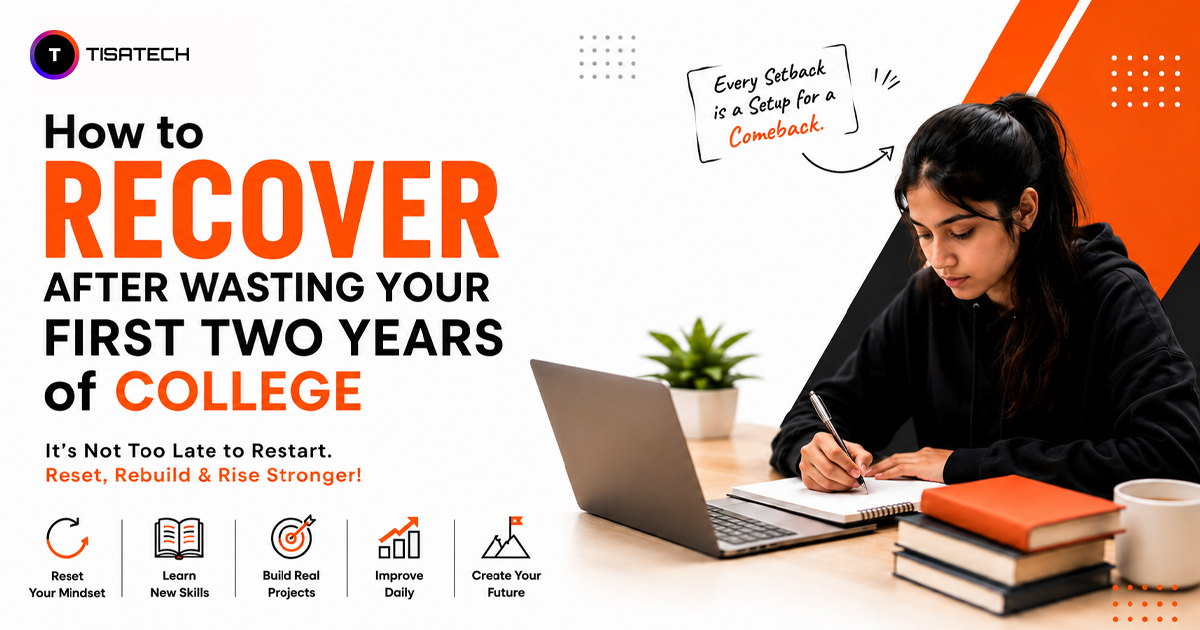
Yes, you can still recover from wasted college years. You cannot change the past, but you can use the remaining time to improve your academics, build practical skills and prepare for a tech career.
Recovery does not mean becoming an expert overnight. It means choosing one clear direction and working on it consistently.
To make this recovery possible, follow a simple plan:
1. Check Your Academic Position
Start by checking your marks, backlogs and attendance. Ask your college about retake or improvement exams, as these can help you improve your academic record and remain eligible for placements.
2. Choose One Tech Field
Select one field based on your interest and career goal, such as web development, data analytics, cloud computing, digital marketing or UI/UX. Focusing on one direction will help you learn properly instead of getting confused between different skills.
3. Follow a Structured Course
Choose a structured tech course that teaches concepts in the right order, from basic knowledge to practical work. Evening or weekend classes can help you continue learning without disturbing your regular college schedule.
4. Build Real Projects
Use your skills to create small but complete projects that solve a real problem. Add your best projects to GitHub, your portfolio and your resume so recruiters can see how you apply your knowledge.
5. Gain Internship Experience
Start applying for internships after learning the basic skills and completing a few projects. An internship can teach you how to work with a team, follow deadlines, understand requirements and handle real project tasks.
6. Improve Your Resume and Online Profile
Create a simple resume that clearly presents your skills, projects, certifications and internship experience. Keep your LinkedIn, GitHub and portfolio updated so recruiters can easily review your work.
7. Start Placement Preparation Early
Begin preparing before your final semester instead of waiting for placement season. Practise aptitude, technical questions, project explanations and mock interviews to improve your knowledge and confidence.
8. Stay Consistent
Set small daily goals for academics, skill learning and project work. Regular effort for one or two hours each day can help you make steady progress without feeling overwhelmed.
You cannot change the college years that have already passed, but you can use the remaining time to build useful skills, gain experience and prepare for better career opportunities.
Which Tech Skills Should You Learn First to Catch Up?
Start by learning one in-demand skill fully instead of trying to learn everything at once. Good options are web development, Python, or data analytics.
Choose a field that excites you and also has strong job demand. Areas like AI/ML, web development, cybersecurity, cloud computing, designing, and digital marketing are all solid starting points. Current placement data shows these domains driving most of the hiring growth. Learn through a proper course so your skills build in the right order, instead of random videos.
Along with learning, try to join an internship program in your college or at a nearby institute. Internships give real project experience and make your resume stronger. Also, build a small personal project like a working website, a simple app, or even a data dashboard. It shows you can apply what you learn and makes you job-ready.
How Do You Stay Motivated While Learning Tech From Scratch?
Learning tech from scratch can feel hard, especially when you think you started late. The best way to stay motivated is to set small daily goals and focus on steady progress.
Complete one lesson, coding exercise or small task every day. These small wins help you stay consistent and build confidence.
A strong college failure recovery mindset means accepting the past and focusing on what you can improve now. Choose one tech course, practise regularly and finish what you start.
Most college motivation tips for struggling students focus only on positive thinking. A simple routine and clear learning plan are more helpful.
Overcoming college disappointment means not letting the past control your future. This is how to get back on track in college and build real college comeback motivation.





How Can TISA-TECH Guide You Into the Tech Field?
If your first two college years felt directionless, you can still build a clear path into the tech field. TISA-TECH, an IT training institute in Jaipur, guides you through structured courses, practical learning and real projects so you do not have to figure everything out alone.
Each course follows a clear learning path, starting with the basics and moving step by step towards practical work and real projects. This helps you understand what to learn next, avoid confusion and see your progress clearly.
TISA-TECH also offers internship opportunities for college students. You can work on real tasks under expert guidance and gain practical experience alongside your studies.
This mix of structured learning and internship experience can help you build useful skills, improve your confidence and prepare for a career in tech.
Conclusion
Wasting the first two years of college does not end your chance of building a career in tech. The time you still have can be used to improve your academics, learn one useful skill and gain practical experience.
Choose one clear direction and follow it step by step. Regular practice, real projects and internship experience can help you build confidence and prepare for future job opportunities.
FAQs Section
Ans. Yes. Tech recruiters focus heavily on your skills, projects, and internships. A strong last two years in a tech course can outweigh a weak academic start.
Ans. Web development, data analytics, and app development are all beginner-friendly and have strong job demand, making them good starting points.
Ans. No. You can start a structured tech course alongside fixing your academics. Both can run in parallel.
Ans. With a structured course and consistent daily practice, many students become job-ready within one to two years, well within their remaining college time.
Ans. Set small daily goals instead of big long-term ones. Completing small coding or learning tasks consistently builds real motivation over time.
Ans. TISA-TECH provides structured tech courses, practical projects and internship opportunities. These help students build skills, gain experience and prepare for tech jobs alongside college.