Jaipur’s IT scene has changed a lot in the last five years. The Rajasthan IT Infrastructure Mission is bringing in over ₹4,200 crore, new IT parks are opening across the city, and more than 18,000 IT jobs are expected in Jaipur through 2026, according to aiassistica.com.
This growth creates more opportunities for freshers, but it also brings more competition. Students send hundreds of applications during placement season, while only a small number turn into interview calls.
Recruiters now look for more than subject knowledge or marks. They want to see practical proof of what a candidate can actually do. Projects, GitHub work, and a well-built portfolio make that proof easier to show. A 2025 Hired.com report found that developers who showcased at least three solid projects received more interview requests than those with none, according to cogentuniversity.com.
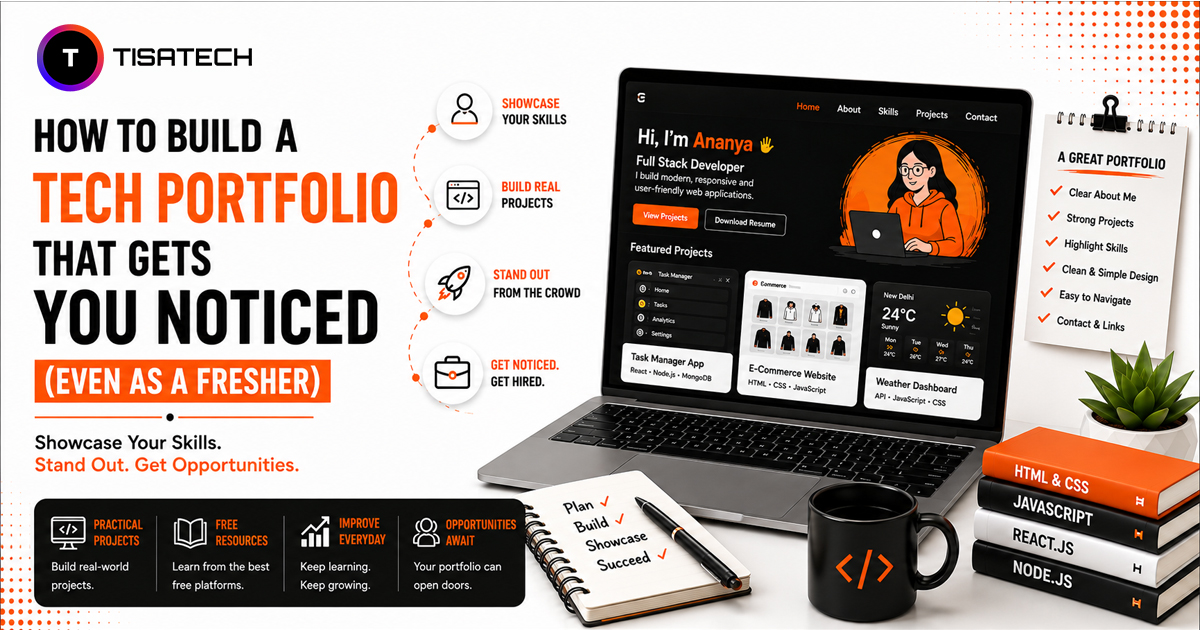
A strong portfolio can help freshers present their skills, projects, and practical work in one place. This guide explains what a tech portfolio should include and how a fresher can build one without wasting time on unnecessary things.

Why Does a Tech Portfolio Matter So Much for Freshers?
A resume tells recruiters what skills a candidate has. A portfolio shows the projects and practical work that the candidate has actually completed. For freshers with little or no work experience, this can make a big difference.
This is why many final-year students in Jaipur want to know how to build a tech portfolio. A degree shows your academic background, but a portfolio shows how well you can use your skills in real work. It can also help recruiters compare you with other candidates who have similar marks or qualifications.
The good part is that you do not need years of experience to build your first portfolio. A few useful projects, presented clearly, can be enough to show your skills and give recruiters a better idea of what you can do.
What Should a Tech Portfolio Include?
Once beginners decide to build a portfolio, the next question is what to include in it. A strong portfolio for freshers usually stands on three main pillars, and none of them require advanced experience.
The first pillar is real projects that solve a useful problem. Instead of copying the same tutorial project, try building something like a budget tracker, booking system, or simple automation tool. These projects show how you use your coding skills in practical work.
The second pillar is clear presentation. Add a short README that explains what the project does, which technologies you used, and how someone can run it. Screenshots or a short demo video can also make the project easier to understand.
The third pillar is a live working link. Recruiters should be able to open the project and see how it works instead of only reading about it.
Together, these three pillars help beginners show their skills clearly, no matter which programming language or tech stack they are learning.
How Should a Fresher Build a Tech Portfolio Step by Step?
Knowing what to include in a portfolio is helpful, but starting one can still feel confusing. Following a few simple steps can make the process much easier.
Step 1: Pick a Real Problem
Choose a problem that people actually face instead of copying a common tutorial project. You can build something like an expense tracker, a hostel mess menu app, or a simple booking tool for a college club.
Step 2: Build the Main Feature First
Do not try to complete everything at once. Start with the main feature and make sure it works properly. You can improve the design and add extra features later.
Step 3: Write a Clear README
Once the project starts working, add a README. Explain what the project does, which technologies you used, and how someone can run it. This makes it easier for recruiters to understand your work.
Step 4: Deploy the Project
Put the project online so recruiters can open and test it through a live link. Platforms like Vercel, Netlify, or Render can help beginners deploy many projects for free.
Step 5: Build 3-4 Projects That Show Different Skills
Follow the same process for a few more projects. Instead of adding many half-finished projects, focus on three or four complete ones.
One project can show database and API skills. Another can show teamwork through a small open-source contribution on GitHub. A third can focus on one specific skill, such as building a clean React interface.
Step 6: Organize Your Work Properly
Once your projects are ready, add them to GitHub and a simple personal portfolio website. Include a short description, source code, screenshots, and live links so recruiters can easily check your work.
What Tech Portfolio Platforms Are Best for Freshers?
Once your projects are ready, the next step is deciding where to show them. Freshers do not need to be active on too many platforms. A few useful ones are enough to present your work properly.
GitHub is one of the most important platforms for developers. You can upload your project code, keep each project in a separate repository, and add a clear README to explain what you built. A well-organized GitHub profile helps recruiters understand your practical skills.
A personal portfolio website gives you one place to present your best work. It can include project descriptions, screenshots, live links, and GitHub links. The website does not need a complex design. A clean and mobile-friendly layout is usually enough.
LinkedIn is useful for sharing your work and staying visible to recruiters. You can post project updates, explain what you learned while building them, and link back to your GitHub or portfolio website.
Together, these platforms give freshers a simple and clear way to present their projects, skills, and progress.
How Does a Portfolio Get Noticed Beyond Just Existing?
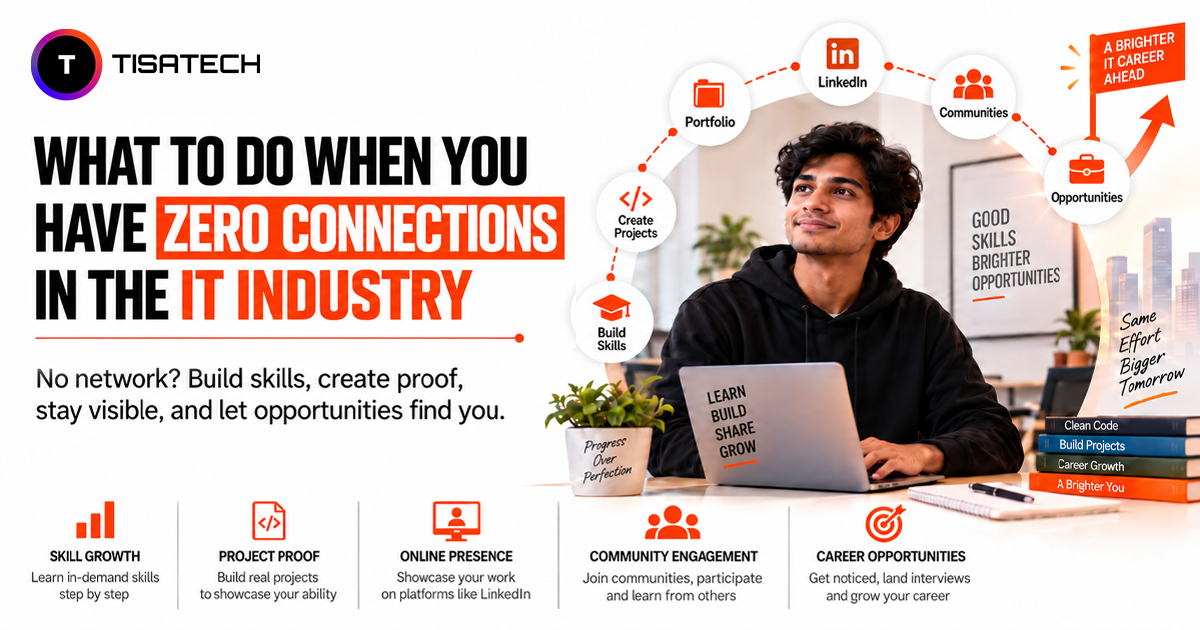
A portfolio gets noticed when you actively share your work and make it easy for recruiters to find. Simply uploading projects to GitHub and leaving them there may not be enough.
Share your projects on LinkedIn with a short explanation of what you built, which tools you used, and what problem you solved. This helps recruiters understand your work better instead of only seeing a project link.
Add your GitHub and portfolio website links to your LinkedIn profile and resume. Keep your portfolio updated when you complete a new project or improve an old one. Regular updates show that you are still building and improving your skills.





Where Can Freshers Get Guided Help Building Their First Portfolio?
Structured training programs can help freshers build their first portfolio with proper guidance, and TISA-TECH offers this type of support in Jaipur.
Courses in Full Stack Development, AI/ML, Data Science, and Cloud Computing include practical project work as part of the training. Students build projects while learning and get feedback during the process, which helps them create a portfolio for tech jobs step by step.
Mentorship also makes a difference. Experienced mentors help students understand coding issues, improve their projects, and avoid common mistakes. Along with this, internship support for freshers can give students more practical exposure and help them understand how real project work is handled.
For Jaipur students who want more guidance while building their first portfolio, TISA-TECH can be a practical option to explore instead of trying to manage the entire process alone.
Conclusion
A strong tech portfolio helps freshers show recruiters what they can actually build. It gives practical proof of skills that a resume alone cannot always show. A few good projects, clear presentation, and regular updates can make a portfolio more useful and noticeable. Start small, keep improving your work, and focus on showing your skills clearly.
FAQs Section
Ans. Yes. Freshers can start with college projects, personal projects, or small open-source contributions. The main goal is to show completed work that clearly demonstrates practical skills.
Ans. Start with a small problem from daily life. A fee reminder tool, hostel mess menu app, expense tracker, or booking system can become a useful portfolio project.
Ans. Three or four complete projects are usually enough. Each project should work properly and show a different skill instead of filling the portfolio with unfinished or similar projects.
Ans. GitHub is important for showing code and project activity. A simple portfolio website can make the work easier for recruiters to explore by bringing projects, live links, and GitHub repositories together.
Ans. Update the portfolio whenever a new project is completed or an existing project improves. Regular updates help keep the portfolio current and show continuous skill development.
Ans. Clear project explanations, working live links, organized GitHub repositories, and practical projects make a portfolio stronger. Recruiters should quickly understand what was built and which skills were used.