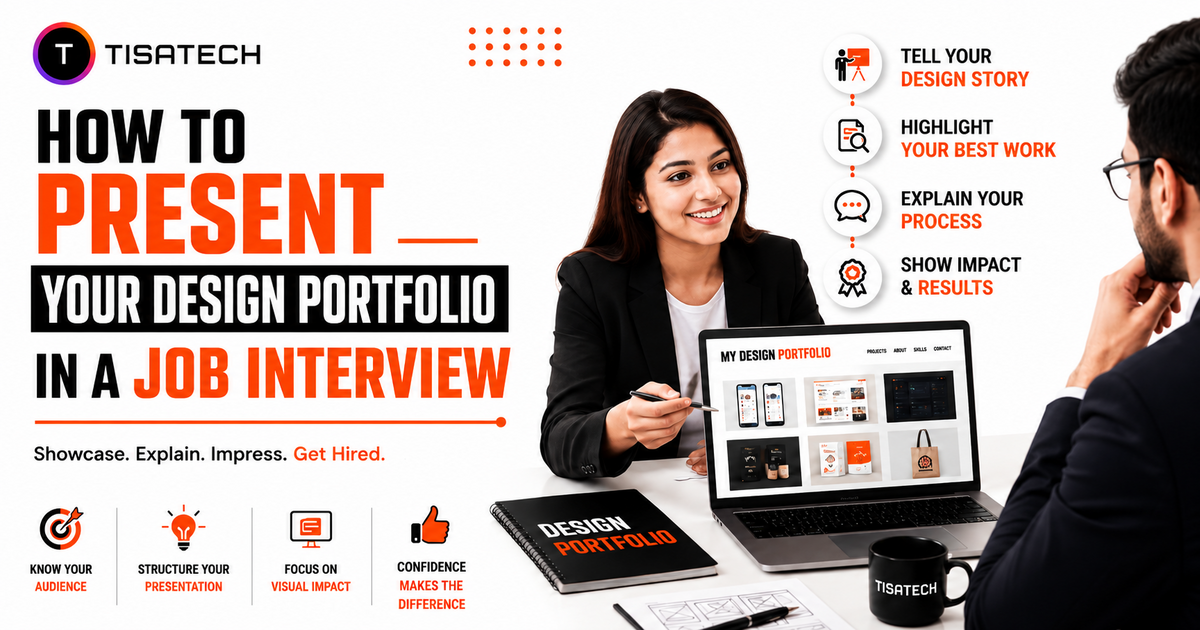
A strong design portfolio alone does not guarantee success in a job interview. Designers also need to explain their work clearly. They should show the thinking behind each project.
A UX lead at Toptal reviewed more than 1,300 UX portfolios and interviewed 250 candidates in one year. The review found that nearly 80% of those portfolios became incomplete or confusing during live presentations. Designer Suelyn Yu also explains that recruiters may spend less than two minutes on the first portfolio review before making a decision.
This shows why portfolio presentation matters. Designers should explain the problem, design process and key decisions clearly. They should avoid reading directly from the screen or rushing through the project.
This guide covers practical design portfolio interview tips, design job interview tips and simple ways to present design work clearly during a UI/UX portfolio interview.

What Should You Do Before the Interview?
Good design interview preparation should start a few days before the interview, not the night before.
Choose two or three projects that match the job role. There is no need to show every project. For example, if the company is hiring for a mobile app role, focus on projects that show relevant UI/UX or app design work.
Prepare a short slide deck or PDF instead of depending only on a live website. A website may load slowly, while a deck helps you control the presentation and show both the final design and the process clearly.
Keep an offline copy ready as a backup. Internet or screen-sharing problems can happen during an interview.
Practise the presentation out loud at least twice and use a timer. Ask a friend or fellow designer to listen once and point out where the explanation becomes unclear or slow. This helps you fix those parts before the real interview.
How Do You Present Your Projects Without Losing the Room?
Start with a short introduction. Mention your name, design background and why the role interests you. Then tell the panel which projects you will present and why you selected them.
For each project, explain your own role first. Recruiters want to understand what decisions you made and what part of the project you handled. Then explain the main user problem in one clear sentence before showing the final design.
Next, show the design process through sketches, wireframes or research notes. This helps recruiters understand how you reached the final solution instead of only seeing the finished screen. This is a better way to showcase design work during an interview.
After that, present the final design and explain the result. Use clear numbers such as higher conversions or fewer support issues if available. If there are no measurable results, relevant user feedback can also support the outcome.
Following this sequence makes it easier to explain design projects in an interview without sounding memorised. Keep enough time at the end for the panel to ask questions.
What Do Recruiters Really Look For in a Design Portfolio?
Recruiters do not only look at how attractive your designs are. They also want to understand how you think, what part of the project you handled, and why you made certain design decisions.
Clear ownership matters. You should be able to explain your exact role in the project and the work you completed. Recruiters also look at your reasoning, so be ready to explain why you selected a particular layout, user flow, or design approach.
Your communication also plays an important role during the interview. Keep your answers simple, specific, and easy to follow. A clear explanation of your work can often create a stronger impression than a visually impressive portfolio with weak reasoning.
How Should Freshers Handle a Portfolio Interview With No Client Work?
If you are a fresher with no client work, you can still make a strong impression in a portfolio interview. Recruiters already know that beginners may have limited professional experience, so the focus should be on the quality of your work and how clearly you explain it.
Choose two or three strong personal, academic, or practice projects. Explain the problem, your design process, the decisions you made, and what you learned from the project. If you used AI tools, mention them clearly and explain which parts you completed or improved yourself.
Avoid adding fake experience just to make your portfolio look bigger. Clear thinking, honest answers, and a well-explained small project can make a stronger impression than a large portfolio with very little depth.
What Mistakes Should You Avoid in a UI UX Portfolio Interview?
A good portfolio can lose its impact if you make small presentation mistakes during the interview. Recruiters want to understand your work, your thinking, and how clearly you communicate your decisions.
Avoid these common mistakes:
- Reading every slide word for word: This can make your presentation sound robotic. Use slides as support and explain your work naturally.
- Showing too many projects: Focus on your strongest projects so you have enough time to explain them properly.
- Jumping directly to the final design: First explain the problem, your process, and why you made certain decisions.
- Copying the company’s brand style: Using their colours or design style just to impress them may look forced. Keep your portfolio consistent with your own work.
- Getting defensive during questions: Treat questions as a chance to explain your thinking. Stay calm and answer clearly.
If you would approach a design differently today, say it openly. It shows that you can review your own work, learn from it, and improve your design decisions.





How Does TISA-TECH Support Design Talent in Jaipur?
Students may know how to design but still find it difficult to explain their work during an interview. TISA-TECH helps Jaipur students build stronger portfolios and improve the way they present their design projects. For students looking for the best place to learn designing in Jaipur, the training focuses on both practical skills and career preparation.
The process starts by reviewing students’ existing projects and selecting the strongest work for their portfolios. Students learn how to organise each project, explain their role, show the design process, and present the final outcome clearly. They also learn the basics of UI/UX designing for beginners, including how to explain design choices and connect them to user needs. Portfolio reviews help identify weak sections, missing information, and areas that need improvement.
After completing their portfolios, students practise through mock interviews. They receive feedback on their answers, presentation flow, and ability to explain design decisions. This step-by-step practice helps Jaipur students present their work with more confidence and prepare for real design interviews.
Conclusion
Good design skills can help you get shortlisted, but the way you present your work can make the real difference in an interview. A strong portfolio should clearly show what you worked on, what decisions you made, and how you solved the problem.
Prepare early and practice until your presentation feels natural, not memorised. Clear answers, confidence, and simple communication often leave a stronger impression than just showing attractive screens.
FAQs Section
Ans. Two to three strong projects are usually enough. The selected projects should match the job role and clearly show the designer’s skills, process, and contribution.
Ans. Yes. Freshers can use academic, personal, or practice projects. The focus should be on explaining the problem, design process, decisions, and final outcome clearly.
Ans. Recruiters usually look at project ownership, design reasoning, communication, and problem-solving. They want to understand how the designer reached the final solution, not just how the screens look.
Ans. A portfolio presentation should usually stay around 15 to 20 minutes. This gives enough time to explain the strongest projects and leaves room for recruiter questions.
Ans. The best place should offer practical portfolio reviews, project presentation guidance, and mock interview practice. TISA-TECH helps Jaipur design students improve their portfolios, explain their work clearly, and prepare for real design interviews.