As technology grows year by year, thousands of final‑year students in Jaipur learn Python, statistics and machine learning. Many believe these skills guarantee an AI job. But when placement season starts, some classmates get shortlisted for AI content roles with only prompt engineering and basic ChatGPT tools. This leaves most learners asking which skill matters in 2026.
India’s own numbers explain the confusion. A 2025 survey by FICCI, EY and Parthenon found that 57% of leading colleges already have an AI policy. SkillStork reported that 53% use generative AI tools to create learning material. Colleges are moving fast, not waiting.
The trend is bigger than colleges. India now leads the world in generative AI adoption. AboutChromebooks reported that 73% of Indians use generative AI tools regularly, ahead of the US and UK. Yet most companies still rely on traditional AI for fraud detection and recommendation systems. The debate is not about which one wins. It is about which skill fits which job.
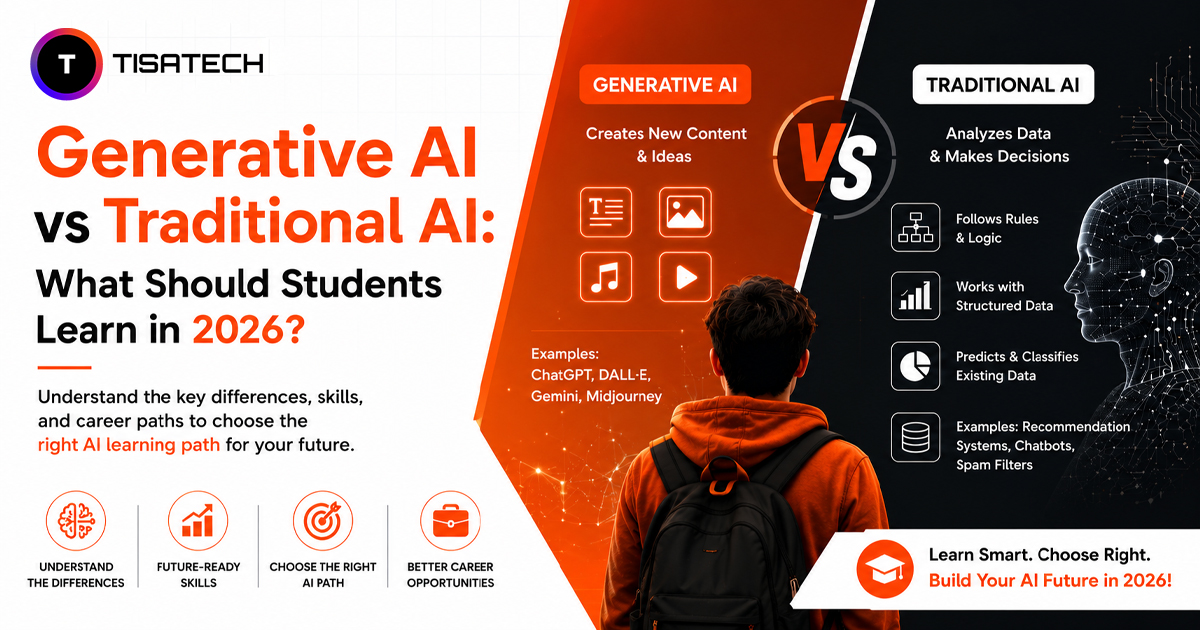
Many beginners skip this understanding and chase trending tools. This creates a skill gap. A clear breakdown of generative AI and traditional AI can help students choose the right path.
This article explains both technologies in simple words. It shows where each one fits and what learners should focus on this year.

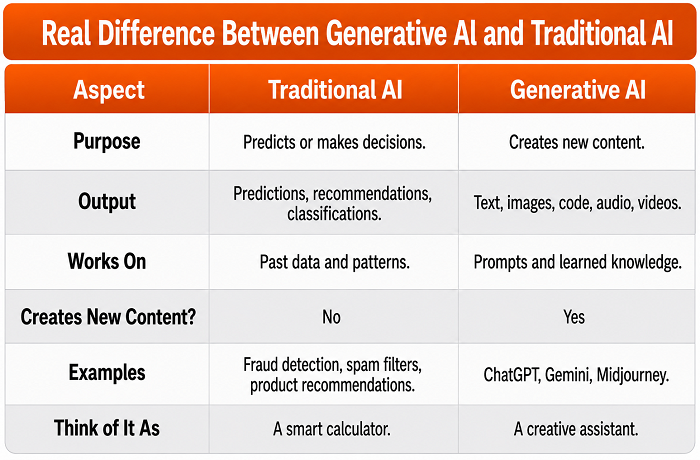
What is the Real Difference Between Generative AI and Traditional AI?
Both Generative AI and Traditional AI are valuable technologies, but they are designed for different tasks.
Here’s a simple comparison to help you understand how they differ.
Should I Learn Traditional AI or Generative AI First?
Many aspirants ask this question before choosing a course. The honest answer depends on the career goal, but a strong foundation always helps.
Traditional AI teaches core concepts like data handling, statistics and model logic. These concepts explain how AI actually thinks. If you start here, you’ll understand generative AI much faster later. Without this base, generative tools can feel like magic.
Generative AI is more about creating. Tools like ChatGPT or Midjourney let you generate text, images, or code instantly. They’re powerful, but they make more sense when you already know the basics.
If you want a technical career in data science or machine learning engineering, begin with traditional AI. If you’re aiming for content, marketing, design, or automation roles, you can start directly with generative AI tools. Either path works well as long as your fundamentals stay clear.
When to Use Traditional AI vs Generative AI?
This is where most confusion happens in real jobs.
Traditional AI works best for structured problems with clear numbers, fixed categories and defined outcomes. Companies use it in loan approval systems, medical diagnosis tools and demand forecasting. It studies clean data and gives accurate results.
Generative AI works best for unstructured and creative tasks. It can write blogs, generate marketing images, summarise documents or draft simple code. It handles unclear situations well and works fast on repetitive creative tasks.
Knowing when to use traditional AI and when to use generative AI saves time and money. Using the wrong tool for the wrong job leads to poor results and wasted effort. Choosing the right tool has now become a real workplace skill.
What Should Students Learn About AI in 2026?
The right way to learn AI in 2026 is to blend both traditional and generative technologies instead of choosing one blindly. Students need a path that builds strong core skills first and then adds generative AI tools on top of that base.
A practical learning plan starts with Python programming to build logic.After that comes statistics to understand numbers and data handling to clean and organise information. After that, learners cover machine learning fundamentals to understand how models work. Once this foundation is clear, they can explore prompt engineering for generative tools. Adding retrieval augmented generation and AI ethics completes a skill set.
The future of AI education is changing fast. Colleges now teach both traditional AI and generative AI together. Students who understand both stay relevant longer and adapt better to new roles.
How to Start Learning Generative AI as a Beginner?
Beginners often feel confused when they see many AI tools online. Starting small solves this problem quickly. Learn prompt writing first by practicing with free tools like ChatGPT or Gemini. Understand how clear instructions lead to better results.
Next, learn basic concepts like tokens, context windows and hallucinations, since these explain why AI sometimes gives wrong answers. After this, move into simple projects. Writing blog outlines, generating product descriptions or building a basic chatbot are good starting points.
Consistency matters more than speed here. Daily practice builds confidence faster than long theory videos.
What is the AI Career Path for College Students in 2026?
The AI career path for college students in 2026 looks completely different from five years ago. Companies no longer hire only for coding skills. They also hire for prompt engineering, AI content creation and automation.
Generative AI job opportunities for graduates include roles like AI content strategist, prompt engineer, chatbot developer and automation specialist. Traditional AI still supports strong career paths in data science, machine learning engineering and business analytics.
Graduates who combine both skill sets stand out during placements. Recruiters increasingly want candidates who understand the full AI picture, not just one narrow tool.





Where Can Jaipur Students Learn Both AI Skills the Right Way?
Learning AI only through YouTube videos rarely builds job ready skills. Structured guidance, mentorship and real projects make a bigger difference, especially for beginners who are just starting out.
Many students in Jaipur feel confused because there are too many AI tutorials online. They often don’t know what to learn first or who to trust. This is where a good IT training institute in Jaipur like TISA-TECH can help.
TISA-TECH offers a complete list of AI courses for beginners. If you want to learn generative AI, you will practice prompt engineering, RAG basics, and popular AI tools through hands-on sessions. The same course also covers traditional AI topics like Python, statistics, and machine learning. This helps you build a strong foundation instead of learning only one part of AI.
The classes focus on practical learning instead of only theory. Every topic is explained in simple words with real examples. Students also work on live projects, so they understand how AI is used in real-world situations and build confidence while learning.
Conclusion
The debate between generative AI and traditional AI is not about which one wins. Both solve different problems and both open career opportunities. Traditional AI is still the backbone for accurate predictions in banking, healthcare, and retail. Generative AI now drives content, automation, and creative work at scale.
Students and professionals who learn both build a stronger skill set. In 2026, the smartest path is to blend them step by step, instead of choosing only one side.
FAQs Section
Ans. Traditional AI predicts and classifies data. Generative AI creates new content like text, images and code.
Ans. Those planning technical roles should start with traditional AI. Anyone aiming for content or creative roles can start with generative AI directly.
Ans. Both fields offer strong opportunities. Generative AI roles are growing faster in content and automation, while traditional AI remains strong in data heavy industries.
Ans. Generative AI tools are easier to start using. Traditional AI requires stronger technical and statistical foundations initially.
Ans. Institutes like TISA-TECH in Jaipur offer combined training covering both traditional AI and generative AI skills under expert guidance.