A common scene happens in almost every college group chat. A senior gets placed, and juniors quickly ask, “भाई, आपके resume में कौन-कौन से projects थे?” The answer is usually one project or sometimes two. After reading it, many students feel that they have nothing useful to show on their own resume.
This problem is common. According to the India Skills Report 2026, Computer Science graduates have 80% employability, while IT engineers have 78%. These are the highest numbers among all streams. However, the report also shows that nearly 93% of students are looking for hands-on experience. This means a degree alone is no longer enough. Recruiters also want to see practical skills. A resume with an empty project section may get ignored within a few seconds.
Good marks and confident interview answers still matter. But recruiters also look for proof that a student can use their knowledge in real work. They want to see something the student has built, tested, improved and completed.
Many students do not start because they think a project must be a large app or a unique startup idea. That is not true. Even a small weekend project that solves one simple problem can be useful. It helps students practise their skills and gives them something real to add to their resume.
This guide is for students who have no projects and do not know where to begin. When students search for IT projects for freshers, they are not looking for more theory. They want a simple starting point, clear steps and one project idea they can begin working on today.

Why Zero Projects Does Not Mean Zero Chances
Every experienced developer also started with zero projects. So, having no projects today does not mean you cannot build a strong career. It simply means you have not started yet.
The difference between a student with no projects and one with many is usually not talent. It is the time spent writing code, making mistakes and fixing them.
Many students searching for IT projects for freshers keep waiting for the perfect idea. The real problem is not a lack of skill. It is the fear of choosing the wrong project and wasting time. Because of this, they spend months planning without building anything.
You do not need ten projects to create opportunities. One simple project can help you practise your skills, improve your resume and take the first step towards internships or jobs. Planning alone cannot build a portfolio. You have to start building.
A Simple Path From Zero Projects to Your First Portfolio
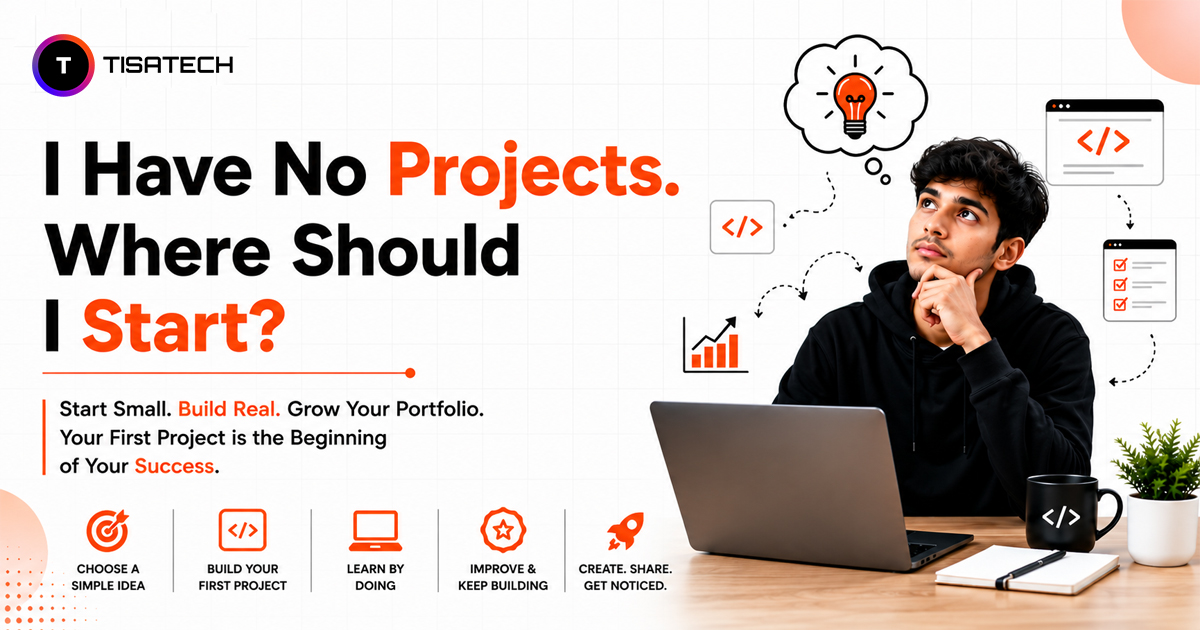
Having no projects can feel confusing, but getting started can be simple. These four steps will help you choose an idea, complete your first project and begin building your portfolio.
Step 1: Pick a Problem, Not a Perfect Idea
Start with a small problem from your daily life. You can build a water tracker, attendance calculator, study timer or assignment reminder. Projects for beginners in programming are easier to complete when they solve a familiar problem because you already understand what the project needs to do.
Do not wait for a unique idea. Your first project only needs to solve one small problem properly. You can also follow a basic tutorial and then change the design or add one useful feature. Keep the project small and build it for one person before thinking about a larger audience.
Step 2: Build It in One Weekend, Starting Today
Do not spend weeks planning your first project. Set a small goal and try to complete its basic version in one weekend. Start with the main feature only. For example, an expense tracker should first allow users to add and view expenses. Login, reports and advanced design can come later.
Use Saturday to build the project and Sunday to test it. Fix the main errors and make sure the basic feature works properly. Your goal is not to create a perfect product. It is to finish a working project that gives you confidence to build the next one.
Step 3: Choose Projects That Match Your Goal
After completing your first project, choose the next one according to the field you want to enter. Project ideas for computer science students can include an expense tracker, quiz application, library system or weather checker. Simple coding projects for students can include a calculator, password generator, countdown timer or attendance calculator.
Beginner-friendly AI projects can include a spam message classifier or an FAQ chatbot. Full stack development projects for beginners can include a to-do application, simple blog, appointment booking system or student record manager. Choose projects that help you practise the skills required for your target role instead of building random applications.
Step 4: Turn One Project Into a Full Career Path
Completing one project is a good start, but students often need guidance to move forward. They may struggle with choosing the right tools, planning features, connecting the frontend with the backend, fixing errors or presenting the final project. A full stack development course for students at TISA-TECH helps learners understand these steps through practical work. Students build projects while learning instead of waiting until the course ends.
TISA-TECH is an IT training institute in Jaipur with practical projects. It provides training in Full Stack Development, AI and Machine Learning, Generative AI, Data Science, Cloud Computing, Digital Marketing and UI/UX Design. Mentors guide students during project planning, development and testing. They also help learners upload projects to GitHub and prepare resumes, portfolios and project-based interview answers. With the right guidance, students can build a useful portfolio and prepare for internships and job opportunities.





Conclusion
The best way to begin is with one small project that you can complete. Choose a simple problem, build its basic version and improve it as you learn.
Do not wait for a perfect idea or advanced skills. Your first project may be simple, but it gives you practical experience and something real to show on your resume. It also helps you understand where you need more practice.
Once you complete one working project, starting the next one feels much easier. With every project, your skills, confidence and portfolio continue to grow.
FAQs Section
Ans. Two to three complete projects are usually enough for a fresher. It is better to show a few working projects that you understand well.
Ans. Yes, you can add a tutorial-based project to your resume. Just make sure you understand the code and add at least one feature or design change of your own.
Ans. Web development is usually easier for beginners. It helps build basic coding and application development skills first.
Ans. A simple first project can take one weekend or a few days. Keeping it small makes it easier to complete.
Ans. Yes. Its full stack development course for students starts with basic concepts and includes practical projects during learning.