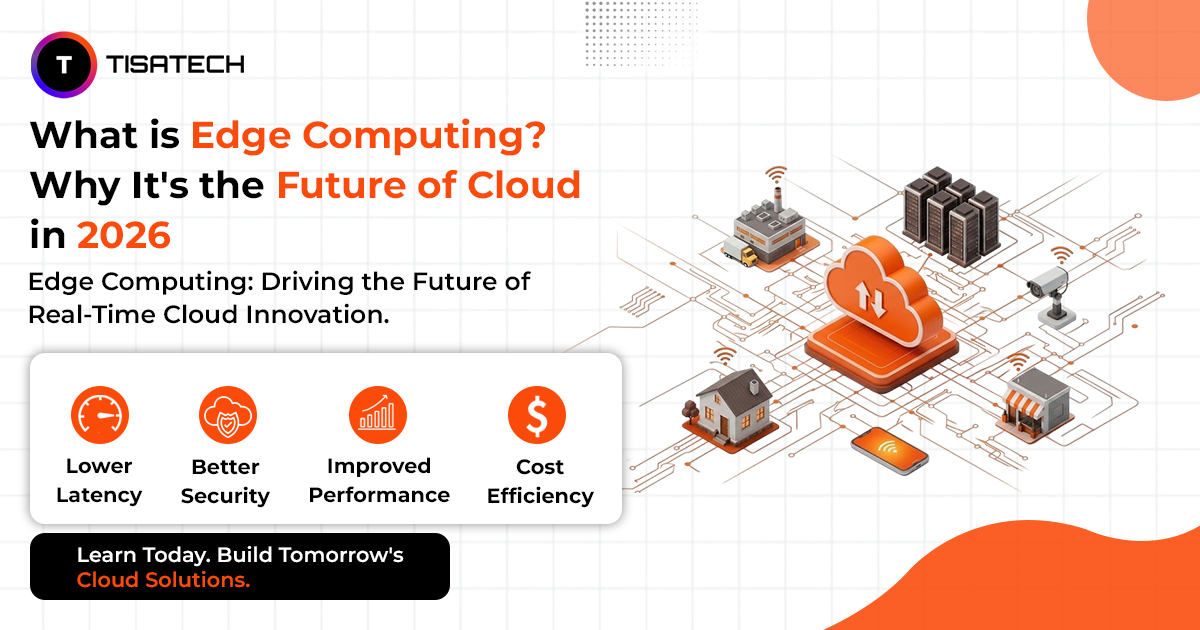
Imagine you are watching a live IPL match on your phone. Suddenly, the video starts buffering. Or think about a smart traffic system in Jaipur that takes too long to respond during heavy traffic. In today’s digital world, even a few seconds of delay can create problems.
The reason is simple. Billions of devices generate data every second. Smartphones, CCTV cameras, smart vehicles, healthcare devices, factory machines, and IoT sensors constantly create and share information.
Traditionally, cloud computing processes this data in centralized data centers. The cloud provides powerful storage and computing resources. However, when data has to travel long distances for processing, delays can occur. This becomes a challenge for applications that need instant responses.
This is where edge computing becomes important. Instead of sending all data to a distant cloud server, it processes important information closer to the source. This reduces latency and improves speed. As a result, systems can make decisions much faster.
The need for this technology is growing fastly. AI applications, IoT devices, 5G networks, and smart city projects all depend on fast data processing. According to the Grand View Research report, the global edge computing market was valued at approximately USD 33.4 billion in 2025. It is expected to reach USD 327.8 billion by 2033.
India is also adopting this technology at a fast pace. The growth of Digital India initiatives, connected devices, smart infrastructure, and modern businesses is increasing the demand for faster computing solutions.
Many experts believe that edge computing is the next step in the evolution of cloud technology. It is not replacing the cloud. Instead, it works alongside the cloud to deliver faster and more efficient services.
In this guide, we will understand what edge computing is, how it works, where it is used, and why it is becoming an important part of the future of cloud computing in 2026 and beyond.

What is Edge Computing? A Simple Explanation for 2026
Here is edge computing explained in simple words. Normally your data goes to a cloud server far away. It gets processed there and then comes back. This round trip takes time.
Edge computing changes this. It processes data right where it is created – near the device, near you, at the “edge” of the network.
Think of food. The cloud is a big kitchen in another city. Edge computing is a small kitchen in your neighbourhood. The local kitchen cooks faster, serves instantly and keeps working even if the road to the main kitchen is blocked.
That neighbourhood kitchen is the edge. So what is edge computing in simple words? It is local data processing that makes technology quick and reliable.
How Does Edge Computing Work? Step-by-Step Process Explained
Edge computing handles data close to where it is created. Instead of sending everything to faraway cloud servers, it processes information nearby and only passes the important results to the cloud.
Step 1: Device creates data
A sensor, traffic camera or fitness tracker generates information.
Step 2: Edge node processes data
A small server near the device handles the data instantly and takes action. No long trip to the cloud is needed.
Step 3: Cloud stores data
The cloud keeps what is not urgent, like large storage, model training and long‑term analytics.
Flow: data starts at the device → gets processed at the edge node → only key results go to the cloud.
This simple process makes systems faster and reduces delays by up to 90% compared to cloud‑only processing. In short, edge computing keeps urgent tasks close and sends bigger jobs to the cloud, giving us speed and reliability together.
Cloud Computing vs Edge Computing: Real Difference
Cloud computing and edge computing are two powerful ways to handle data in today’s tech world. Both have their own strengths, and understanding their differences helps you see how they work together to make systems faster and smarter.
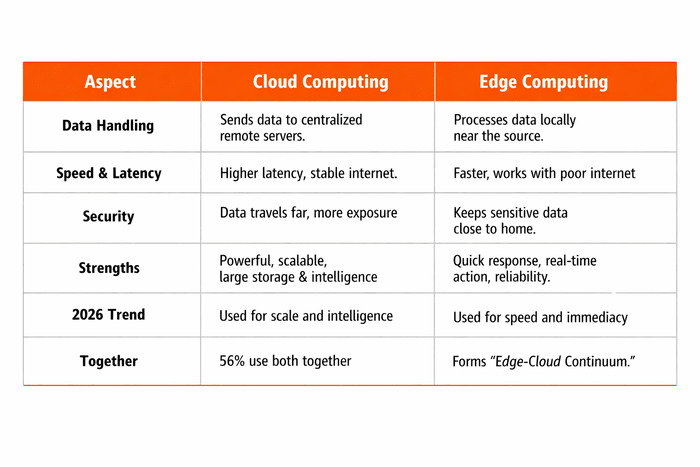
In short, cloud computing brings scale and intelligence, while edge computing adds speed and real‑time action. When combined, they create a balanced system that’s efficient, secure, and ready for the future.
Top Benefits of Edge Computing
Edge computing brings five clear advantages that make technology faster and more reliable.
- Speed: Local processing eliminates round trips. Milliseconds matter in medical devices, vehicles, and industrial equipment.
- Offline reliability: Edge devices keep running even when the internet is weak or lost. Critical for remote factories and rural healthcare.
- Lower data costs: Only filtered, relevant data travels to the cloud. This can cut wide‑area network costs by up to 50%.
- Better privacy: Sensitive information stays local and does not travel across public internet connections.
- Supports AI and IoT at scale: Edge lets AI run locally on millions of devices without overwhelming centralized servers.
Real-World Examples of Edge Computing You See Every Day
Edge computing is already part of daily life. Some easy examples:
- Self‑driving cars: They make huge amounts of data every day. Edge helps with braking and obstacle detection instantly, without waiting for clouds.
- Smart factories: Machines are checked in milliseconds. If something goes wrong, the edge shuts them down fast to avoid accidents.
- Healthcare wearables: They track vitals in real time and alert doctors right away, no cloud delay.
- Smart city traffic: Cameras process data locally to spot accidents and change signals quickly.
- Banking fraud alerts: Edge AI catches suspicious transactions the moment they happen. That instant alert on your phone is edge at work.
Is Edge Computing Replacing Cloud Computing? The Real Answer
No. The answer is direct.
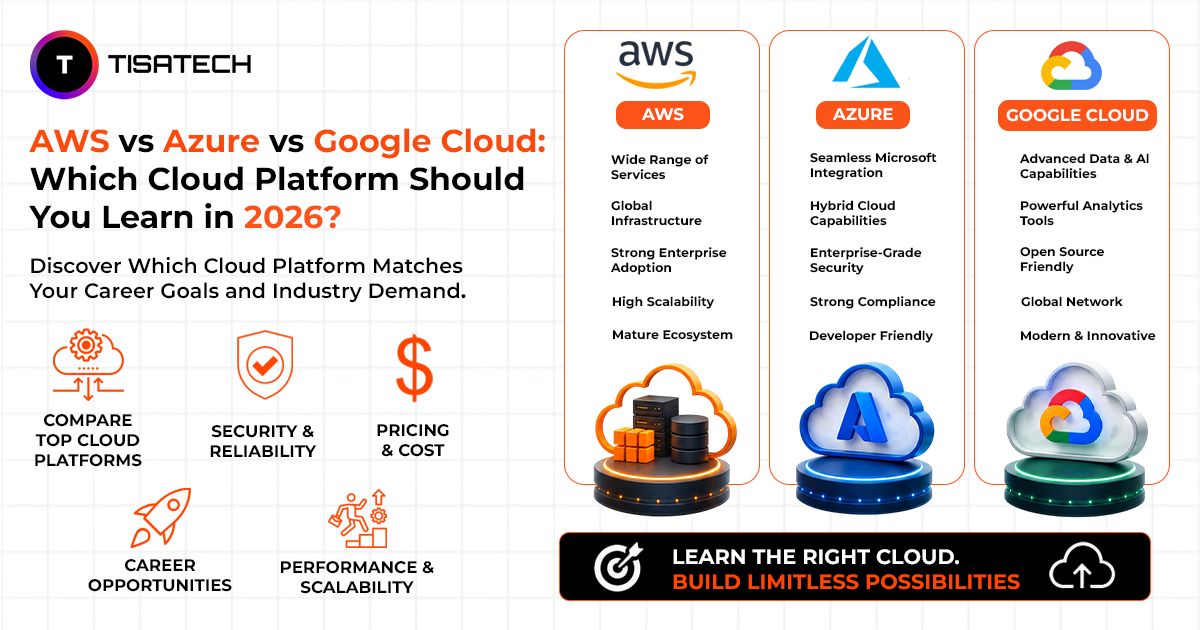
According to Statista, in early 2026 AWS had 28% of the global cloud market, Azure 21%, and Google Cloud 14%. Together they account for about 67% of enterprise cloud spending, and these numbers are still rising, not falling.
The real change is in how the work is shared.
- Edge computing handles quick, real‑time actions close to where data is created.
- Cloud computing manages heavy storage, analytics, and long‑term planning.
Think of it like a team sport. The cloud is the coach making the strategy. The edge is the player reacting instantly on the field. Without the coach, the player has no plan. Without the player, the plan never works. Both are needed to win.
Why Edge Computing is the Future of Cloud in 2026
Edge computing is becoming the heart of the modern cloud. Four big reasons are driving it:
1. 5G networks can connect up to 1 million devices in one square kilometre. As 5G spreads in India, edge computing will run at a huge scale.
2. IoT devices are exploding. By 2030, around 29 billion devices will send nonstop data. A single cloud can’t handle all of it, so edge helps by processing data closer to the source.
3. AI at the edge makes things faster. Models trained in the cloud run locally at the edge, and image recognition works 5x quicker than cloud‑only AI.
4. Smart cities in India like Jaipur are already using edge for traffic lights, public monitoring, and utilities. This creates strong demand for cloud + edge experts.
If you are planning a cloud roadmap for 2026, edge computing is not optional. It’s central.





How TISA-TECH Prepares You for the Cloud & Edge Career
TISA‑TECH is a trusted IT training institute in Jaipur with its centre in Jhotwara. It focuses on practical, job‑ready courses that help students and freshers build real skills for the IT industry.
The cloud computing course in Jaipur at TISA‑TECH starts with the basics and then covers major platforms like AWS, Azure and Google Cloud. It also explains how edge computing connects with the cloud, so learners understand the complete picture. Classes are hands-on, taught by faculty with real industry experience, and every student gets placement support. This means you don’t just study theory, you practice real projects and get guidance to find jobs.
If you want a cloud computing roadmap 2026 that keeps you relevant for the next decade, TISA‑TECH is the right place to begin. Jaipur students can visit the Jhotwara centre to check upcoming batches and see how the program fits their career goals.
Conclusion
Edge computing is already part of daily life. It runs in hospitals, highways, factories and even on your phone. The idea is clear: process data where it is created. This makes systems faster, smarter and more reliable.
The cloud is still important, but the future is about cloud computing and edge computing working together. For students and freshers in Jaipur, this is a big chance. Companies are hiring, the market is growing, and the best place to learn these skills is TISA‑TECH in Jhotwara.
FAQs Section
Ans. It means processing data near the device where it is created – instead of sending it to a faraway server. It makes systems faster and more reliable.
Ans. A device generates data → a nearby edge node processes it instantly → only important results go to the cloud. This cuts delay by up to 90%.
Ans. Cloud processes data in remote, centralized servers. Edge processes it locally near the source. Cloud is better for scale. Edge is better for speed.
Ans. No. They work together. Edge handles real-time local decisions. Cloud handles storage and scale.
Ans. Self-driving cars, smart factory sensors, hospital wearables, smart city traffic cameras, and real-time bank fraud detection.
Ans. IoT growth, 5G rollout, AI at the edge, and data privacy laws all require fast local processing that a centralized cloud alone cannot deliver.
Ans. From USD 658 billion in 2026 to USD 1,869 billion by 2031 – a 23.2% CAGR.
Ans. TISA‑TECH in Jhotwara offers a practical cloud computing course in Jaipur with AWS, Azure and Google Cloud. Training is hands-on, taught by industry experts, and comes with placement support. It’s the best place for students and freshers to learn skills for the cloud and edge era.