A mechanical engineering student had zero cloud experience. No technical background in cloud. No previous cloud job. He started with AWS, built five practical projects, uploaded them to GitHub and completed one certification. That practical work helped him get a remote cloud support role with a US-based company. This learner story was shared on EkasCloud’s blog, and it shows one important thing: projects can give freshers something real to show employers.
The opportunity in cloud computing is also growing. According to Taggd’s India Decoding Jobs 2026 report, NASSCOM projects that cloud computing will create nearly 14 million jobs in India by 2026. But getting noticed is not always easy. Many freshers have similar certificates and basic cloud knowledge. A practical project can make your profile more useful because it shows how you actually worked with cloud tools.
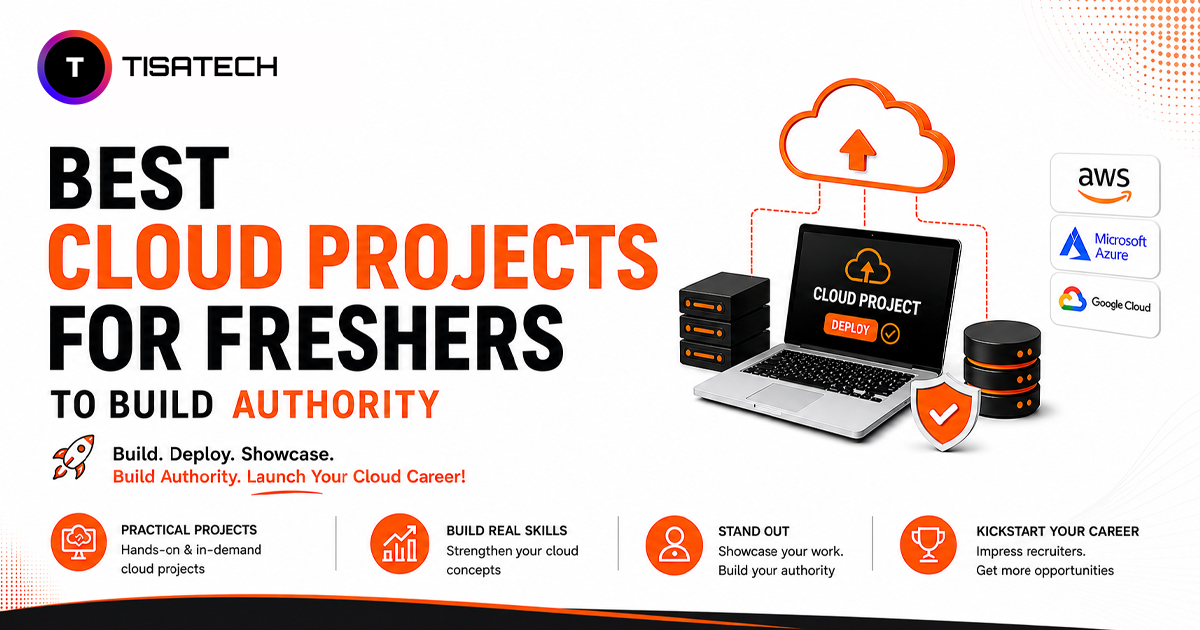
That is why cloud projects for freshers matter. A project is more than something you add to your college record. It gives you a chance to build, test, solve errors and understand how cloud services work in practice. You can also add the project to GitHub and discuss it during interviews.
In this blog, we will look at some of the best cloud projects freshers can build in 2026, how complete beginners can start and how these projects can help build a stronger cloud portfolio.

Why Do Cloud Projects Matter So Much for Freshers Today?
Cloud computing is no longer just an extra skill. Many apps, websites and online services depend on cloud platforms to store data, run applications and manage users. As companies increase their use of cloud technology, they also look for candidates who can apply cloud concepts in practical work.
This is why cloud projects for freshers are important. A project shows how you use cloud services to build, deploy and manage something in a real setup. It also teaches you how to test your work, find errors and fix problems when something does not work as expected.
Projects also help during interviews and make it easier to talk about your skills with confidence. If you have worked on AWS or Azure yourself, you can explain what you built, which services you used, what challenges you faced and how you solved them. For freshers, this practical experience can make a resume and portfolio stronger and give employers a better idea of what you can actually do.
What Are the Best Cloud Projects for Freshers to Build Authority?
Here are project ideas that go beyond basic tutorials. Each one teaches you a real skill that companies actually look for.
a. Host Your Own Resume Website on the Cloud
This is one of the most popular cloud projects to build a portfolio. Host a simple resume website using cloud storage, connect it with a content delivery network for fast loading, and add a visitor counter using a small backend function. This single project touches storage, networking, security, and automation together. It looks simple, but it teaches you how real websites actually run in production.
Technologies you can use:
- Amazon S3 or Azure Blob Storage (for hosting the website)
- Amazon CloudFront or Azure CDN (for fast, secure delivery)
- AWS Lambda or Azure Functions (for the visitor counter)
- DynamoDB or Cosmos DB (to store visitor count)
- GitHub Actions (to automate deployment)
b. Build Your Own Cloud Infrastructure From Scratch
Building cloud infrastructure projects using tools like Terraform is one of the strongest ways to impress recruiters. Instead of clicking through a dashboard, you write code that creates a secure network, sets up private and public sections, and controls who can access what. This shows employers you understand infrastructure as code, which is a skill most freshers never touch.
Technologies you can use:
- Terraform or AWS CloudFormation (to write infrastructure as code)
- Amazon VPC or Azure Virtual Network (for the network setup)
- IAM roles and security groups (for access control)
- NAT Gateway (for private subnet internet access)
- Git (to version control your infrastructure code)
c. Build an Event-Driven Application
Build a small application where one action triggers another automatically. For example, when someone uploads a file, a function processes it and sends a notification. This is called serverless architecture. It shows you understand how modern applications react to events instead of running on a single server all the time.
Technologies you can use:
- AWS Lambda or Azure Functions (to process the event)
- Amazon S3 (to trigger the function on file upload)
- API Gateway (to expose your function as an API)
- SNS or SQS (to send notifications or queue messages)
- Step Functions (to chain multiple steps together)
d. Set Up Monitoring for Your Own Project
Most freshers stop once their app runs. But real engineers watch their systems closely. Connect your project to a monitoring tool, track its logs, and set up alerts for errors. This single addition tells an employer you think beyond just building something, you think about maintaining it too.
Technologies you can use:
- Amazon CloudWatch or Azure Monitor (for metrics and logs)
- Grafana (for visual dashboards)
- Prometheus (for metrics collection, if self-hosted)
- Slack or PagerDuty (for real-time alerts)
- ELK stack or Loki (for log aggregation)
e. Migrate an Old Application to the Cloud
Take any old application, maybe one you built in college, and move it step by step to the cloud. Shift the database first, then the storage, then the backend. Document every problem you face along the way. This mirrors real company work, since most businesses migrate old systems rather than build fresh ones.
Technologies you can use:
- Amazon RDS or Azure SQL Database (for the migrated database)
- Docker (to containerize the application)
- Amazon S3 (for static assets)
- Redis (to replace file-based session storage)
- AWS Database Migration Service (to move data smoothly)
These are genuine hands-on cloud projects for learning that go far beyond theory. They also double up as cloud projects to build authority and career because you can write about them, publish them, and talk about them confidently in interviews. Recruiters remember candidates who explain their own decisions, not ones who repeat textbook definitions.
How to Build Cloud Projects as a Beginner?
Start with one platform such as AWS, Azure or Google Cloud and follow a clear cloud computing roadmap instead of jumping between random tutorials. Begin with a simple project like hosting a website, setting up cloud storage or deploying a basic app. Use the free tier where possible and focus on understanding each step.
Once the project is complete, upload it to GitHub and briefly explain what you built, which services you used and what problem you solved. This makes your practical cloud skills easier to show to recruiters.





How Can TISA-TECH Help You Build Real Cloud Projects?
Knowing cloud concepts is one thing. Building a working project on your own is where most beginners get stuck. TISA-TECH helps Jaipur students bridge this gap through practical cloud training and guided project work. Students work on real cloud tasks during training and internships instead of only watching lessons or reading theory. Mentors guide them while they set up services, solve errors and complete projects step by step.
By the end, students have practical work they can add to their resume, GitHub or portfolio and explain clearly during interviews. For beginners with little or no project experience, this makes it easier to move from learning cloud concepts to working on real cloud projects.
Conclusion
Certificates can help you get noticed, but projects show what you can actually do. Cloud projects for freshers are important for building practical skills and preparing for cloud jobs in 2026. Start with one small project, test it, fix the errors and complete it properly. Even one project can teach you more than only reading theory and can give you useful work to add to your portfolio.
FAQs Section
Ans. Two to three solid projects are enough if you can explain them clearly. Quality matters more than quantity.
Ans. AWS is the most beginner-friendly due to its free tier and wide documentation, but Azure and Google Cloud work equally well.
Ans. Basic knowledge of Python or JavaScript helps, but many starter projects need only configuration and scripting skills.
Ans. Upload your code to GitHub and write a short blog explaining your project. This combination works best for recruiters.
Ans. Yes. A guided internship exposes you to real tasks and mentor feedback, which is far more valuable than solo tutorial-based learning.