Almost everyone has asked a chatbot a question by now. ChatGPT, Gemini and Copilot answer in seconds, in smooth and confident language. Most of the time, that answer helps.
Sometimes it is completely wrong, and the tone never changes. This is called AI hallucination. In 2023, a New York lawyer used ChatGPT to find court cases for a legal filing. The chatbot gave him case names and quotes. He even asked whether the cases were real, and ChatGPT said yes. The cases were fake, and the judge sanctioned him and his law firm.
A year later, Google’s AI Overview told a user to add non-toxic glue to pizza sauce so the cheese would stick. It had copied that tip from an old Reddit joke.
These examples show why AI-generated answers need verification. For students using chatbots for assignments, coding or career research, knowing how hallucinations occur is the first step toward using AI responsibly.

What Is AI Hallucination in Simple Words?
You know that one friend who never says “I don’t know”? Ask him anything and he answers with a straight face. Sometimes he’s right. Other times he’s making it up as he talks, and you can’t tell which is which.
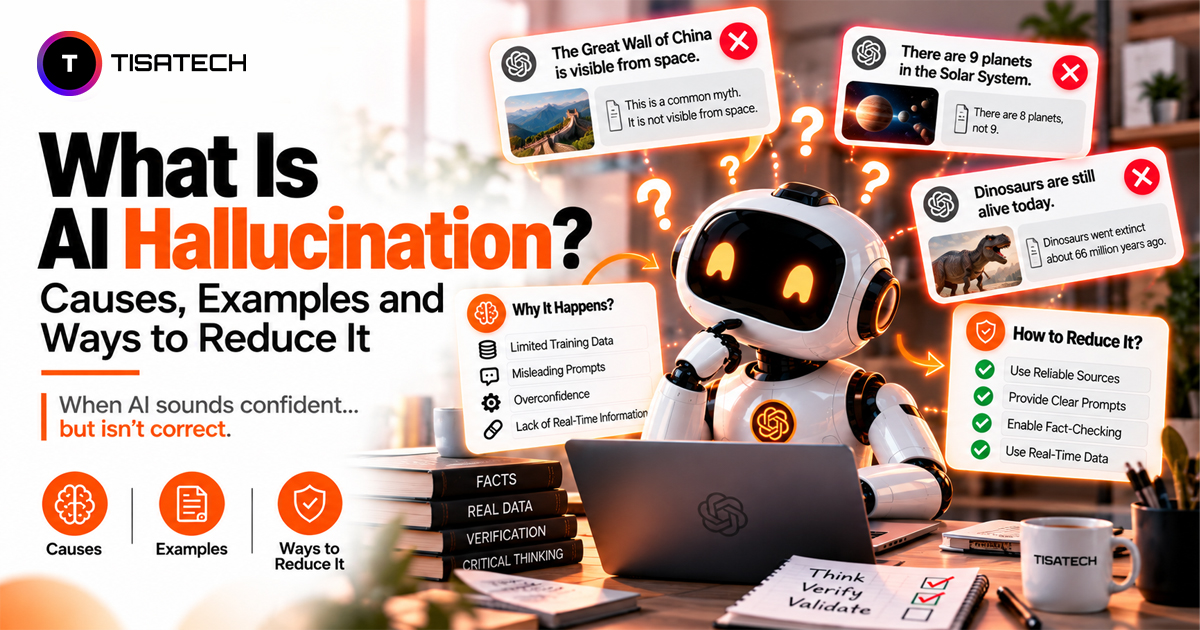
Chatbots do the same thing. When ChatGPT or Gemini generates false, misleading, or unsupported information, that’s an AI hallucination. It might invent a date, a link, even a research paper nobody ever wrote. It isn’t lying in the human sense. IBM compares it to people seeing faces in clouds. The pattern looks real, but it isn’t there.
Newer models make fewer of these mistakes, but none has fixed the problem completely. So if an answer matters, check it.
Why Does ChatGPT Hallucinate?
A chatbot generates responses by predicting the most likely next word or token (a small piece of text), based on patterns it learned during training and the context of your question. It aims to produce a likely response, not necessarily a true one. That is why it can give a confident answer even when the facts are wrong. Web search and retrieval tools can provide additional evidence, but the model still needs to interpret that information correctly.
Problems in the training data can increase the risk of hallucinations. Models learn patterns from large amounts of text, which may contain errors, outdated information and jokes. The glue-on-pizza tip started as one. On topics with very little text, the model has nothing solid to lean on, so it guesses.
Then there’s the exam problem. OpenAI’s researchers argue that models hallucinate partly because training and testing reward guessing over admitting doubt. Think of a multiple-choice paper: a blank earns nothing, but a lucky guess might earn a mark. This can encourage the model to guess instead of admitting uncertainty.
Three smaller things push it further. First, temperature controls how random the word choice is. Higher temperature generally makes responses more varied, while lower temperature makes them more predictable, but not necessarily more accurate. Second, a vague prompt leaves blanks, and the model fills each one with a guess. Third, training stops at a cutoff date, so a question about a new rule or tool can get an answer that sounds current but isn’t.
What Are the Types of AI Hallucinations?
Researchers sort AI hallucinations into two main groups. A survey on hallucination in large language models names them factuality hallucinations and faithfulness hallucinations. Factuality errors clash with real-world facts. Faithfulness errors ignore or twist the source or the instructions you gave.
In daily use, these errors appear in three common text forms, plus image errors.
(h4) Factual hallucination. The tool states something false about the real world. It might give the wrong year for a famous event. It might also name a researcher who never existed or cite a book that nobody wrote.
Contextual hallucination. You paste a document and ask for a summary. The tool adds details your file never mentioned or bends the ones it did. This error is easy to miss because you trust the summary to stay inside your file. Researchers file it under faithfulness errors, and the taxonomy of LLM hallucinations also calls it an intrinsic hallucination, since the output contradicts the input you gave.
Contradictory response. The tool gives conflicting answers in the same chat. It may call a software feature secure in one reply and insecure in the next. Ask the same question twice in different words to catch this one.
Image errors. Image generators make related mistakes. Hands with extra or missing fingers are the classic example. These visual errors differ from text hallucinations, but they point to a similar problem: the model produces output that looks right but contains mistakes.
What Are Some Real AI Hallucination Examples?
The lawyer case mentioned in the introduction was not an isolated incident. A database tracking court rulings shows how lawyers have used AI-generated fake citations in court cases around the world.
Air Canada also faced consequences for its chatbot’s mistake. In 2022, Jake Moffatt asked the airline’s chatbot about bereavement fares after his grandmother died. The chatbot told him he could claim the discount after his trip, but that rule did not exist. In February 2024, a Canadian tribunal ordered Air Canada to pay him CA$812.02. It also rejected the airline’s argument that the chatbot was a separate legal entity.
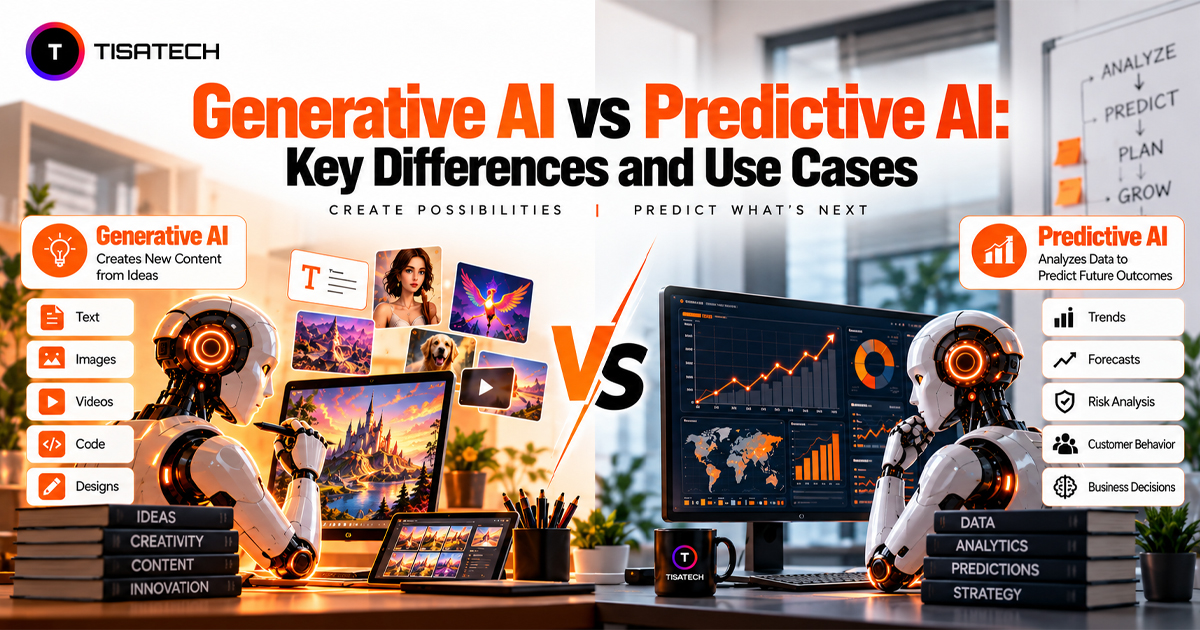
Chatbots and AI agents can perform different tasks and use different tools, but both can provide incorrect information. Understanding the difference between generative AI, chatbots, and AI agents helps explain why advanced capabilities do not always produce accurate answers.
Students and programmers face similar problems. When asked for research papers, AI may list papers that do not exist, along with convincing author names, journal titles, and broken links. Coding tools may also suggest Python functions that do not exist. The code may look correct but fail when someone runs it.
Vectara’s hallucination leaderboard reported hallucination rates as low as 1.8% for one model in its October 2026 results, but the scores measure errors in document summarization, not overall AI accuracy.
How to Detect AI Hallucinations?
Treat every confident answer as a rough draft, then run four quick checks.
Search the specifics. Google every name, number, law and paper title. Real ones leave a trail online. Fake ones usually don’t.
Open the links. Fake links may fail or lead to unrelated pages. For research papers, check the DOI (a permanent identifier for a paper) through doi.org, or search the exact title in Google Scholar.
Compare answers. Ask the same factual question in a fresh chat and compare key claims. Major differences can signal uncertainty, but consistent answers can still be wrong. Researchers developed SelfCheckGPT to use disagreement between responses as one signal for detecting possible hallucinations.
Verify the source yourself. AI tools can invent sources, so a citation alone proves nothing. Gemini’s double-check feature can compare parts of a response with Google Search results. Open the underlying sources to confirm that they support the claims.
How to Reduce AI Hallucinations
You can’t stop it completely, but you can cut it down a lot. Start with the prompt.
Be specific, and give the model an exit. Name the topic, the format and the limit. Then say what to do when it’s unsure. Compare these two:
Weak prompt: “Tell me about Python libraries for data work.”
Stronger prompt: “List five Python libraries for data analysis, with one line on what each does. If you’re not sure a library exists, say so instead of guessing.”
The second version narrows the task and lets the model admit doubt. Anthropic’s guide recommends allowing the model to say “I don’t know” when it lacks enough information. Google Cloud adds two more tips: give the model a template, and tell it what you want and don’t want.
Ground answers in trusted sources. Provide reliable documents and ask the tool to answer only from them. Retrieval-augmented generation (RAG) looks up relevant documents first, then uses that information to generate a response. Its effectiveness depends on the quality of the sources and the accuracy of retrieval.
Ask small questions. One part at a time leaves less room for guessing.
Lower the temperature if your tool allows it, but verify important facts because more predictable responses are not always more accurate.
Keep a human in the loop. Never let a chatbot check itself. The lawyer in our intro asked ChatGPT whether its cases were real, and it said yes. Doctors, lawyers and accountants must review AI output before anyone acts on it, and students should do the same before they submit an assignment.
Quick checklist before you trust any AI answer:
- Have all names, numbers, and links been verified?
- Is the tool instructed to answer only from trusted sources?
- Is the answer reliable enough to stake a grade, money, or reputation on?
| Follow Us for Daily Tech Tips |



|
How Does TISA-TECH Teach Students to Use AI Safely?
TISA-TECH teaches AI safety through practice, not theory. Students ask a chatbot to write code with a specific Python library, then run it themselves. When the tool calls a function that does not exist, the error on screen teaches more than any lecture. Students then rewrite the prompt with a “say so if unsure” line and compare both results, while mentors check each step and point out weak prompts and wrong outputs.
The generative AI course in Jaipur at TISA-TECH covers prompt writing, RAG basics and hands-on builds. Students also learn to add simple checks to their own code, and placement support helps them move from learning to their first tech job.
Conclusion
AI hallucinations occur when systems generate false, misleading, or unsupported information. Better models, clear prompts and reliable sources can reduce the risk, but important claims still need verification. Safe use depends on matching verification effort to the consequences of an error.
The higher the cost of an error, the more carefully you should verify the answer. A quick check today can prevent a costly mistake tomorrow.
FAQs Section
Ans. Yes, it often invents titles, authors and DOIs that look real. Search the exact title on Google Scholar and paste the DOI after doi.org to confirm the paper exists.
Ans. Only after running it. Chatbots sometimes call functions that do not exist, so match every unfamiliar function with the library’s official documentation.
Ans. It generates likely word sequences, and those responses can sound confident even when they are wrong. Asking the tool to flag anything it is unsure about makes it show doubt more often.
Ans. Newer models may perform better on specific factuality tests, but results vary by model and task. Hallucinations remain possible, so verify important claims against reliable sources.
Ans. No. Hallucination means a false or invented answer, while bias means an unfair lean caused by skewed training data. A reply can have one without the other.